



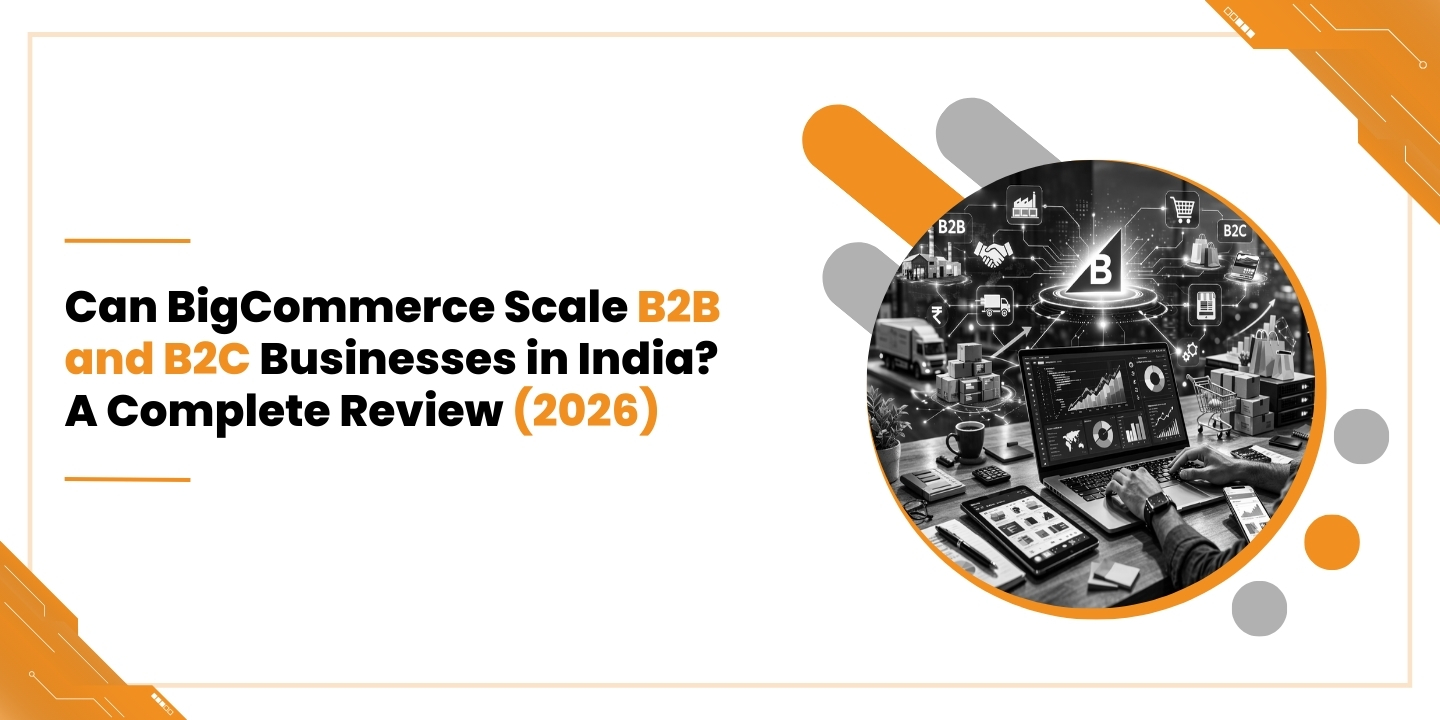
India’s eCommerce market is expanding at an unprecedented pace. From fast-growing D2C brands to large-scale manufacturers going digital, both B2B and B2C businesses are experiencing rapid transformation. With increasing competition and evolving consumer expectations, Indian companies now require scalable, high-performance platforms that can support long-term growth. This is where BigCommerce enters the conversation. Known for its enterprise ready capabilities and flexibility, BigCommerce is often considered a strong option for ambitious brands. In this review, we explore whether it can truly scale B2B and B2C businesses in India in 2026 and beyond.
Understanding the Indian B2B & B2C eCommerce Landscape
India’s eCommerce ecosystem is evolving across D2C brands, marketplaces and digital wholesale networks. Businesses now require flexible platforms that handle competition, bulk operations, and rapid expansion without technical bottlenecks.Growth of B2C eCommerce in India
The B2C market has matured, with D2C brands increasingly building independent online stores to control branding, customer data, and margins. Despite this, marketplaces like Amazon and Flipkart still dominate traffic, pushing brands to optimize their stores for user experience, SEO, and seamless checkout. High-performance infrastructure is essential to scale without constant migrations or limitations.Rise of B2B eCommerce in India
B2B businesses are also digitizing, with wholesalers, distributors, and manufacturers moving online to serve retailers across multiple states. B2B operations require complex pricing, bulk ordering, credit management, and custom catalogs. Buyers expect the convenience of B2C shopping but with enterprise-level flexibility. Platforms must manage large catalogs, multiple buyer accounts, and tiered pricing while maintaining security and high performance.What Makes BigCommerce Suitable for Indian Businesses?
BigCommerce offers scalable architecture, built-in B2B functionality, SEO strength, and multi-currency capabilities. These features make it a strong contender for Indian brands seeking performance, flexibility, and enterprise-level growth support.Scalability Without Platform Limits
One of the strongest arguments in favor of BigCommerce is its scalability. Unlike some platforms that charge transaction fees or limit functionality as businesses grow, BigCommerce offers a more flexible structure. There are no additional transaction fees imposed by the platform itself. Its enterprise-level infrastructure is designed to handle high traffic volumes and complex product catalogs. For Indian brands planning long-term growth, this eliminates the fear of outgrowing their platform. During festive seasons like Diwali or end-of-year sales, traffic spikes can overwhelm poorly optimized systems. BigCommerce is built to handle such surges, ensuring stable performance even under heavy demand.Built-in B2B Features
For B2B businesses, BigCommerce offers native functionality that reduces dependency on excessive third-party tools. These features include:- Custom pricing based on customer groups
- Role-based access for company accounts
- Quote management systems
- Bulk ordering capabilities
Strong B2C Capabilities
On the B2C side, BigCommerce provides powerful SEO features and multi-channel selling options. Brands can optimize URLs, metadata, and structured data to improve visibility on search engines. The platform supports integrations with social commerce channels and marketplaces, allowing businesses to manage inventory centrally. Additionally, its conversion-optimized checkout process reduces cart abandonment, a critical factor in competitive Indian markets. Companies aiming to build high-performance storefronts often leverage bigcommerce ecommerce development services to ensure design and technical optimization align with customer expectations.Multi-Currency & Global Selling
Indian businesses are increasingly expanding globally. BigCommerce supports INR transactions and enables multi-currency functionality for cross-border selling. Whether a brand wants to target domestic consumers or international markets, the platform provides flexibility. With the right bigcommerce development agency, businesses can implement localized storefronts and region-specific pricing strategies efficiently.BigCommerce for B2B in India
For manufacturers and distributors, BigCommerce provides company accounts, custom pricing, credit management, and purchase workflows making it suitable for digitizing complex B2B operations across India efficiently.B2B Edition Features
BigCommerce’s B2B Edition strengthens its core functionality with enterprise-grade tools such as:- Company accounts with multiple user permissions
- Custom price lists based on customer segments
- Purchase order workflows
- Credit limit management
- Custom catalogs for different buyers
Ideal Indian B2B Use Cases
BigCommerce is particularly effective for:- Manufacturers supplying products to retailers across multiple states
- Distributors managing layered dealer networks
- Wholesalers handling bulk pricing structures
- Industrial suppliers with extensive SKU catalogs
BigCommerce for B2C Brands in India
D2C brands benefit from high-performance hosting, marketing integrations, SEO tools, and optimized checkout systems, helping Indian B2C businesses manage traffic spikes and scale revenue sustainably.B2C Scalability for Indian Brands
For consumer-focused brands, scalability means managing sudden traffic spikes, seasonal promotions, and expanding product catalogs without performance issues. BigCommerce supports:- Large product catalogs with multiple variants
- Mobile-optimized storefronts
- Stable performance during high-demand campaigns
Marketing & SEO Capabilities
Organic visibility plays a vital role in long-term profitability. BigCommerce includes built-in SEO tools such as customizable URLs, meta controls, and schema markup support. These features help brands rank better on search engines and reduce dependency on paid advertising. The platform also integrates easily with CRM systems, email marketing tools, analytics software, and automation platforms. With strategic bigcommerce development services, businesses can create content-driven funnels, personalized campaigns, and conversion-focused landing pages that drive sustainable growth.Performance & Scalability: Can It Handle Growth in India?
BigCommerce delivers cloud reliability, high traffic handling, large catalog management, and strong security ensuring Indian businesses can expand without migrating platforms or compromising performance.High Traffic & Large Catalog Handling
As businesses expand, product catalogs can grow into thousands of SKUs. BigCommerce is built to handle such scale without compromising performance. Whether it is a B2C fashion brand or a B2B industrial supplier, large inventories remain manageable. Businesses that hire bigcommerce developers can further optimize database structures and streamline backend processes.Speed & Performance
Site speed directly impacts conversions. BigCommerce’s cloud infrastructure ensures reliable uptime and fast loading times. For Indian markets where mobile usage dominates, this is particularly important.Security & Compliance
Security is non-negotiable in eCommerce. BigCommerce provides secure hosting and compliance standards that protect customer data and transactions. When supported by a trusted bigcommerce development agency, businesses can implement additional security layers and integrations.Enterprise-Ready Infrastructure
From API flexibility to integration capabilities, BigCommerce offers enterprise-level infrastructure. Growing brands often rely on specialized bigcommerce development services to integrate payment gateways, shipping providers, and ERP systems.Pros and Cons for Indian Businesses
While BigCommerce offers scalability and advanced B2B features, it may involve higher initial investment and a learning curve, making it more suitable for growth-focused rather than early-stage brands.-
Pros
- Scalable Architecture for Long-Term Growth BigCommerce is built to support businesses as they move from mid-scale operations to enterprise-level growth. Indian brands planning aggressive expansion whether in B2B distribution or D2C retail can scale without migrating platforms.
- Strong Built-in B2B Features Native B2B capabilities such as custom pricing, company accounts, bulk ordering, and quote management reduce dependency on multiple third-party tools. This is especially valuable for Indian manufacturers, wholesalers, and distributors digitizing operations.
- No Platform Transaction Fees Unlike some platforms that charge additional transaction fees, BigCommerce does not impose extra platform-based transaction costs. For high-volume Indian sellers, this can significantly protect profit margins over time.
- Enterprise-Level Reliability With secure cloud hosting, high uptime, and strong infrastructure, businesses can manage traffic spikes during festive sales, promotional campaigns, or bulk procurement cycles without performance breakdowns.
- Multi-Channel & Global Selling Capabilities Indian brands can sell across marketplaces, social platforms, and international markets from a centralized backend. Multi-currency and cross-border features make global expansion more manageable.
-
Cons
- Learning Curve for Traditional Businesses Businesses transitioning from offline or legacy systems may require time to adapt. The backend flexibility and advanced features can feel complex without proper onboarding or technical guidance.
- Higher Pricing Compared to Entry-Level Platforms BigCommerce is not positioned as a low-cost starter platform. For very small startups with limited budgets, initial investment may feel higher compared to simpler alternatives.
- Dependency on Strategic Implementation The platform’s success largely depends on how well it is implemented. Without proper optimization, businesses may not fully utilize its scalability potential.