




Frequently Asked Questions
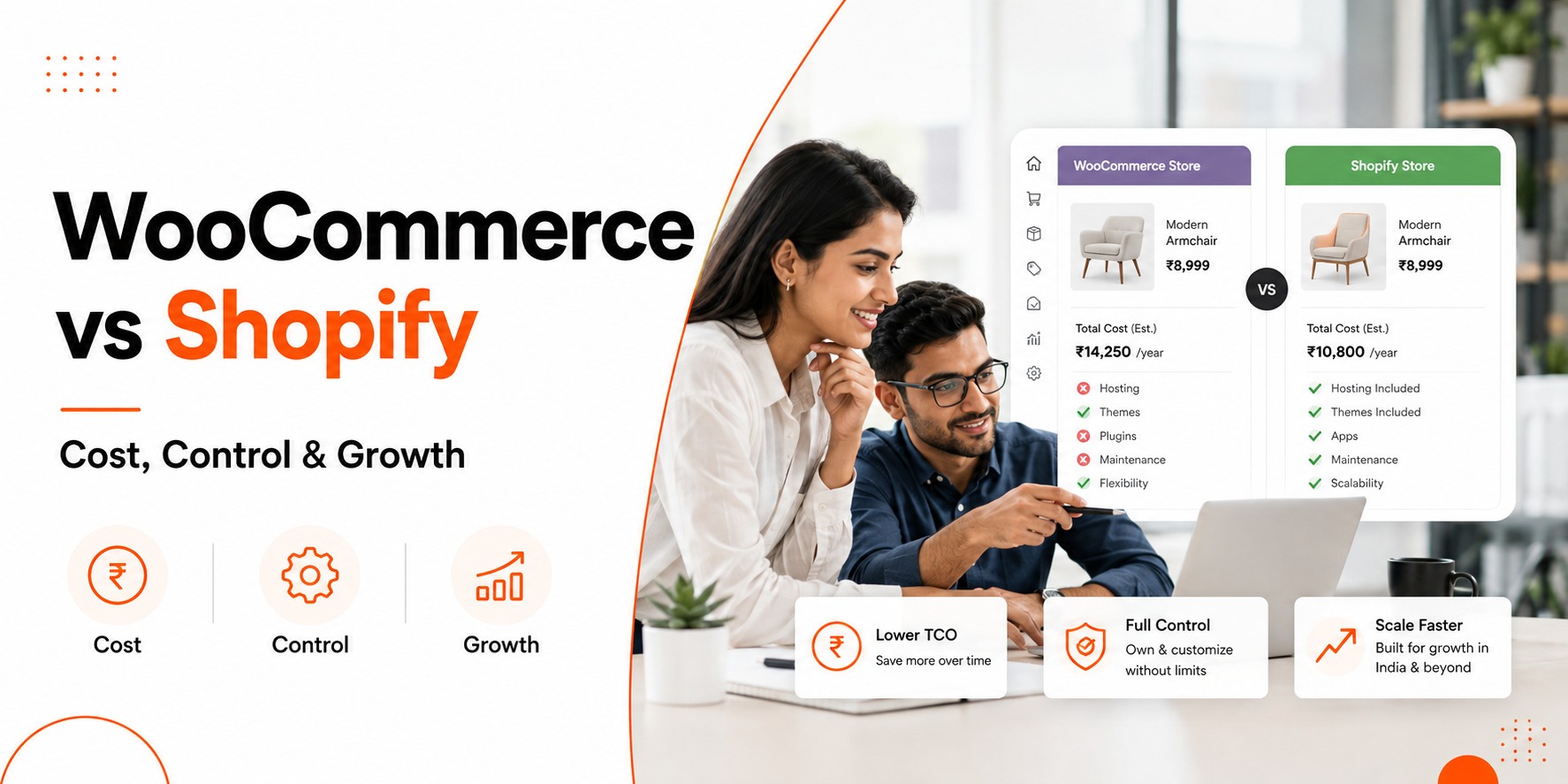
WooCommerce has no core subscription, but the business must pay for hosting, extensions, development, security, and maintenance. Shopify charges a subscription that includes hosting and core infrastructure. WooCommerce may be cheaper for a basic store, but complex stores can cost more to maintain.
Yes. Shopify is suitable for small businesses that want to launch quickly and avoid managing servers. Merchants should still calculate payment-gateway fees, applications, design, and transaction costs before selecting a plan.
Yes. Cash on delivery can be configured as a manual payment method, and Shopify does not charge third-party transaction fees on manual payments.
Yes. WooCommerce can support UPI through compatible Indian payment-gateway plugins or custom API integrations. The integration should be tested for refunds, webhooks, payment failures, and order updates.
WooCommerce provides greater direct control over hosting, code, databases, templates, and checkout behaviour. Shopify provides extensive customization through themes, applications, APIs, and custom development but remains a managed platform.
Businesses should hire expert Shopify developers in India when they need custom theme development, migration, application integrations, speed improvements, complex catalogue configuration, or long-term technical support.
A business should hire a dedicated WooCommerce developer in India when it requires custom plugins, specialized checkout logic, ERP integration, performance optimization, migration, or ongoing technical maintenance.
Shopify is generally easier to scale operationally because infrastructure is managed. WooCommerce can offer greater long-term flexibility and ownership, but the business must invest in suitable hosting, security, architecture, and maintenance.