



BigCommerceEcommerceShopifyWooCommerce

Top AI Solutions for Automating Shopify, WooCommerce, and BigCommerce

Frequently Asked Questions

AI ecommerce automation combines artificial intelligence with ecommerce data, APIs and workflows to complete repetitive tasks or assist employees with decisions. Common examples include support, product categorization, recommendations, reporting and inventory analysis.

Yes. Shopify businesses can use native automation, apps, APIs, webhooks and custom development for AI-powered customer support, product management, marketing, reporting, inventory and operational workflows.

Yes. WooCommerce can combine WordPress plugins, APIs and custom development with AI services. Its flexible architecture makes it suitable for businesses requiring highly customized workflows.

Yes. BigCommerce supports API-driven integrations that can connect ecommerce operations with AI models, ERP systems, CRMs, warehouses and other business applications.

There is no single best option. Shopify provides a strong managed ecosystem, WooCommerce offers extensive customization and BigCommerce works well for complex and API-driven commerce environments.

Both. Traditional automation is better for predictable conditions. AI is more useful when a task requires interpretation, classification, summarization or reasoning.

Not always. Native platform tools and automation applications may solve many common problems. Custom development becomes more useful when workflows involve several systems, proprietary data or complex business rules.

Large refunds, major discounts, price changes, supplier purchase orders, fraud decisions, credit decisions and legal issues should generally retain human approval.

Start with a repetitive and measurable process with relatively low risk. Product tagging, support classification, reporting, review analysis and inventory notifications can all be useful starting points.

Businesses may choose an AI automation company in India when they require custom ecommerce integrations, AI agents, workflow development, API integrations, ERP or CRM connections and ongoing technical support without creating a large internal automation engineering team.

Shopify

Top Shopify Developers in Ahmedabad for Health & Wellness Businesses in 2026

Frequently Asked Questions

These companies can be considered for analysis: DIT India, 9eCommerce, DIT Interactive, Green Cube Solutions, Kleverish, LapaOne, Stymeta, APPWRK, SocioLabs, and Tameta Tech. Some of them are located in Ahmedabad, and some offer their services to customers from Ahmedabad. Everything depends on your store’s size, the requirements for design and integration, etc.

Always start by considering the relevant experience of the Shopify developer when it comes to projects and technologies. Find out if they have worked on projects like custom themes, migrations, apps, subscription systems, third-party API integrations, mobile UI and UX design, and other businesses like yours.

A price is not fixed for any standard. The cost will depend on whether theme setup, customization, migration, custom application development, integration, subscription plans, Shopify Plus, B2B features, and maintenance are required. Request an estimate from agencies based on scope to be able to make an apples-to-apples comparison.

Basic installation on Shopify takes less than two weeks, but the installation of a custom storefront can take much more time. The migration process, custom app installation, connection to APIs, catalog creation, approval of the design, content creation, and testing affect the schedule. Request a schedule from the developer company with milestones, not only delivery dates.

Sure. Shopify is being used by companies involved in health, nutrition, beauty, personal care, and wellness. Shopify itself emphasizes that the health and wellness merchants are important among their ecommerce materials. The end result must incorporate all the aspects of complexity of the product, compliance, subscriptions, education, and claims.

Yes, Shopify sites have the capability to offer subscription services for the product. It is beneficial for supplements, skincare, vitamins, wellness, personal care, and so on. You should discuss this with your developer to learn about its working and integration with discounts, inventory, customer account management, and payment management.

Yes, provided that there are proper APIs available on ERP/CRM or a pre-existing connector for Shopify exists. The range of integration may involve customers, inventory, order management, fulfillment, products, or marketing information. However, complex integrations need to be considered early on due to potential impacts on architecture, schedule, testing, and support.

Shopify Plus could be the best choice for enterprises that have more sales volume, complicated automation, B2B demands, multiple locations, and sophisticated operations. One must not consider Shopify Plus based only on anticipated growth of their enterprise. Evaluate what Plus actually provides compared to its cost.

Certainly. Moving of goods, customers, order history, contents, URLs, and other store information from ecommerce solutions to Shopify is common practice for businesses. It is recommended to have a plan regarding redirects, SEO, integration, redesign, verification, and testing when moving a store. In more complicated cases, custom scripts may be needed.

Make sure to ask about relevant Shopify samples, the scope of work performed by you, who will run the project, the scope of custom functionality, testing of integration points, what happens during deployment, and after-launch support. Don’t forget to clarify what is not included in the quote since the answer to this question may save you from unpleasant surprises in the future.

Shopify

AI in Shopify: How Indian Brands Can Automate and Scale Their Stores

Frequently Asked Questions

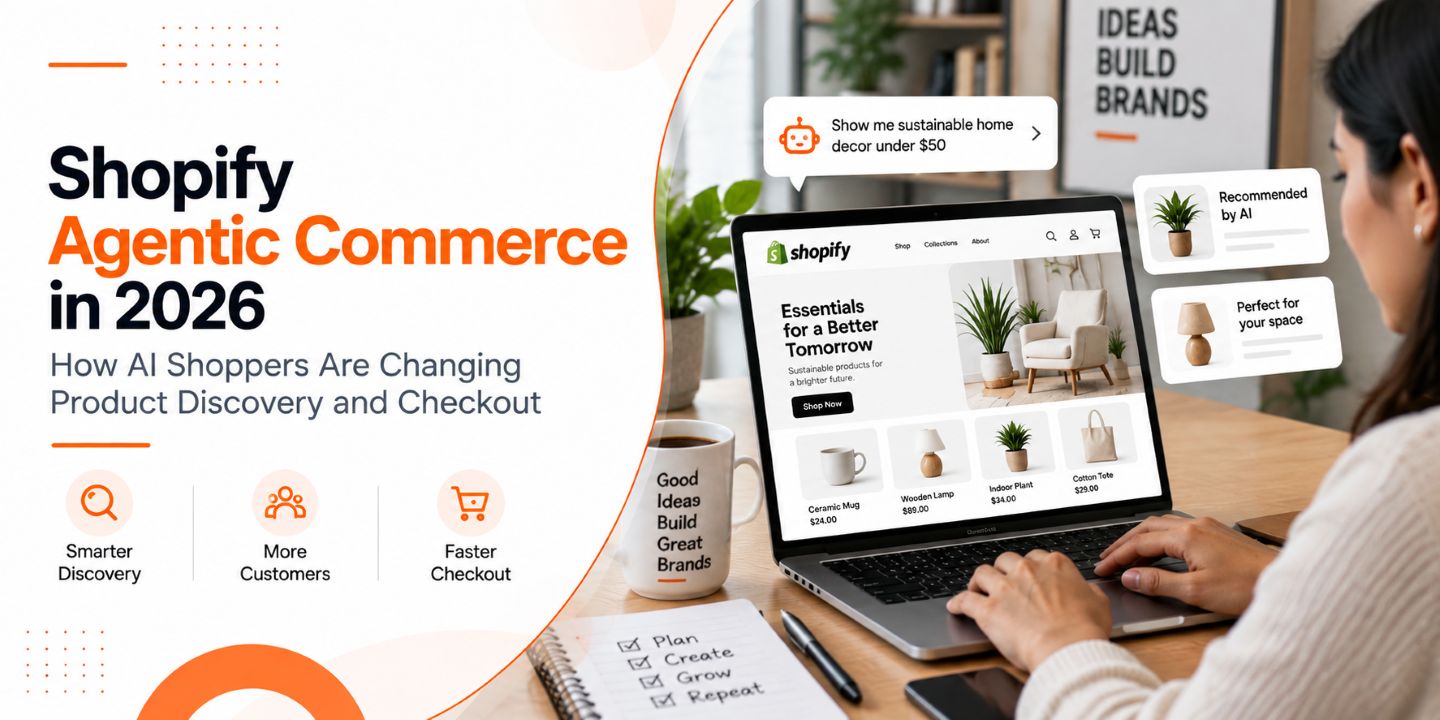
Automation through AI in Shopify makes use of artificial intelligence in order to understand data from the store, comprehend the events that have taken place, suggest actions, or even execute tasks. Examples of automation in this case may be customer services, merchandising, product recommendations, etc.

Agent-Based Development in Shopify links AI agents to the data, APIs, apps, and business systems of Shopify so that they can accomplish multiple tasks according to a set of rules. Rather than producing text, the agent will analyze sales, look at the stock, detect any issues, prepare to act, and get approval from the worker.

In theory, there are various processes that could be automated, but full automation is not always a wise option. Issues such as price adjustment, issuing of refunds, payment processing, conflicts between customers and businesses, buying process, and decisions regarding the personal data of clients should be handled by people.

AI can help in sales through improvements in product discovery, search relevance, recommendations, customer service, segmentation, cart abandonment, merchandising, and retention marketing. AI typically produces the best results when it solves a particular customer or business issue, not just by implementing it due to its popularity.

Sure. Shopify offers features like APIs, apps, automation, customer and product data, analytics, and integrations that help achieve AI commerce. Indian brands can also integrate Shopify with local logistics, ERPs, WhatsApp channels, payments, CRMs, and even custom apps.

The cost of development depends greatly on scope. Setting up and configuring an existing AI app might need little development, but custom agents that incorporate such elements as Shopify API, ERP system, customers' data, workflow, dashboard, and even AI itself might result in rather large software development project.

Use the app if the functionality you need is common and there is a well-established product that takes care of it. Think about custom development if the process flow is specific to your company, integrates with several systems, uses proprietary information, needs unusual access rights, or may give you a competitive advantage.

AI visibility may be achieved through making available structured, useful, and indexed information about products, categories, policies, knowledge, the organization itself, and many others. This includes, but is not limited to, such things as structured product information, accurate prices and availability, technical specifications, FAQs, reviews, and third party information.

Review their knowledge on the use of Shopify APIs, apps, integrations, AI models, workflow automation, security, data processing, monitoring, and human verification. Also ask for concrete workflows that they have implemented to confirm their claims on their proficiency with AI systems.

Begin with something repetitive, measurable, and low risk. DIT India recommends starting with practical AI use cases such as customer support classification, weekly sales reporting, product categorization, product content assistance, inventory notifications, or review analysis. Measure time savings, accuracy improvements, and error reduction before using AI for more critical business decisions.

ShopifyWooCommerce

WooCommerce vs Shopify for Indian Businesses: Cost, Control, and Growth Compared

Frequently Asked Questions

WooCommerce has no core subscription, but the business must pay for hosting, extensions, development, security, and maintenance. Shopify charges a subscription that includes hosting and core infrastructure. WooCommerce may be cheaper for a basic store, but complex stores can cost more to maintain.

Yes. Shopify is suitable for small businesses that want to launch quickly and avoid managing servers. Merchants should still calculate payment-gateway fees, applications, design, and transaction costs before selecting a plan.

Yes. Cash on delivery can be configured as a manual payment method, and Shopify does not charge third-party transaction fees on manual payments.

Yes. WooCommerce can support UPI through compatible Indian payment-gateway plugins or custom API integrations. The integration should be tested for refunds, webhooks, payment failures, and order updates.

WooCommerce provides greater direct control over hosting, code, databases, templates, and checkout behaviour. Shopify provides extensive customization through themes, applications, APIs, and custom development but remains a managed platform.

Businesses should hire expert Shopify developers in India when they need custom theme development, migration, application integrations, speed improvements, complex catalogue configuration, or long-term technical support.

A business should hire a dedicated WooCommerce developer in India when it requires custom plugins, specialized checkout logic, ERP integration, performance optimization, migration, or ongoing technical maintenance.

Shopify is generally easier to scale operationally because infrastructure is managed. WooCommerce can offer greater long-term flexibility and ownership, but the business must invest in suitable hosting, security, architecture, and maintenance.

Got a Project or Partnership in Mind?

    100% secure, no spam.