




Frequently Asked Questions
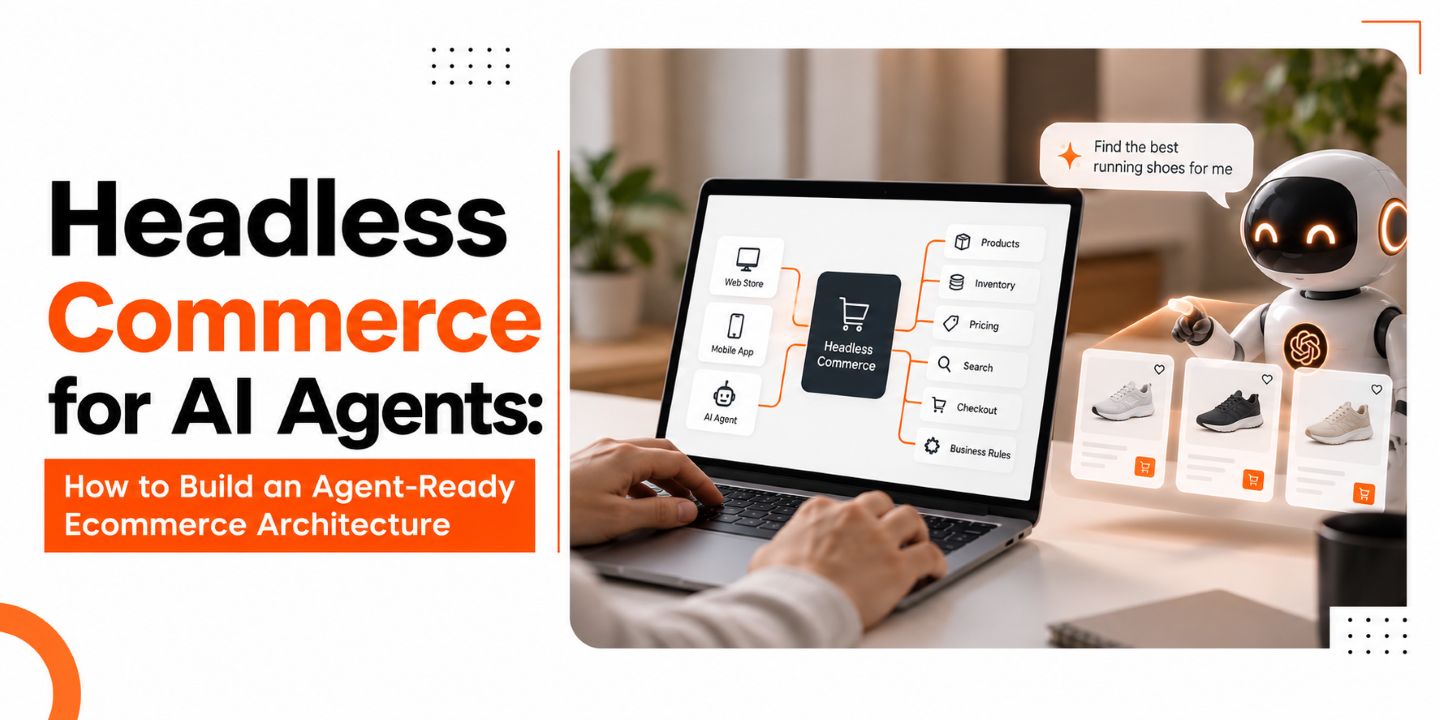
Headless commerce for AI agents separates the ecommerce backend from individual customer interfaces and exposes approved commerce capabilities through APIs or similar controlled interfaces. This allows websites, mobile applications, and AI assistants to access product, search, inventory, cart, and other commerce information without depending entirely on traditional web pages.
An agent-ready ecommerce system needs structured product data, accessible search, reliable APIs, current pricing and inventory, authentication, permission controls, and dependable backend business rules. AI agents should be able to retrieve accurate information without receiving unrestricted access to the ecommerce database or administrative systems.
Not always. AI shopping capabilities can also be introduced on traditional ecommerce platforms. Headless architecture becomes particularly useful when a business wants websites, mobile applications, AI assistants, and future channels to access the same commerce services independently.
Headless ecommerce solutions in India can help businesses separate frontend experiences from commerce functionality, connect multiple business systems, expose structured APIs, and support new customer channels. For AI commerce, this makes it easier to provide agents with controlled access to product search, inventory, pricing, carts, and other approved functions.
AI agents can access product information through approved APIs, catalog services, search systems, or agent-specific protocols. Product information should be structured so attributes such as price, size, material, compatibility, variants, and availability can be retrieved reliably rather than inferred from visual web pages.
Yes, when the ecommerce architecture provides an authorized cart API or equivalent service. The agent should send the requested product and quantity to the commerce platform, which then validates availability and creates or updates the cart. The AI should not bypass the platform's normal commerce rules.
It can be, provided the architecture uses proper authentication, authorization, validation, logging, and permission controls. Agents should receive only the minimum access required for each task. Sensitive customer or administrative information should never become publicly accessible simply because an AI interface has been introduced.
Look beyond frontend development. A suitable headless ecommerce development company in India should understand ecommerce APIs, authentication, PIM, ERP, CRM, OMS, search, payments, integrations, cloud infrastructure, security, and performance. For AI projects, ask specifically about structured data, agent permissions, real-time commerce information, and monitoring.
Usually not. Start by reviewing the current product data, APIs, search, inventory, pricing, customer authentication, carts, checkout, and integrations. Businesses with an existing headless architecture may already have much of the required foundation and may only need targeted architectural improvements.
Start with an architecture and product-data audit. Identify where product information, inventory, pricing, search, customer data, orders, and business rules currently live. Then determine which capabilities are already available through APIs and where better structured data, integrations, permissions, or monitoring are required.