



Uncategorized

Headless Commerce vs Composable Commerce: Which Is Better for Ecommerce in 2026?

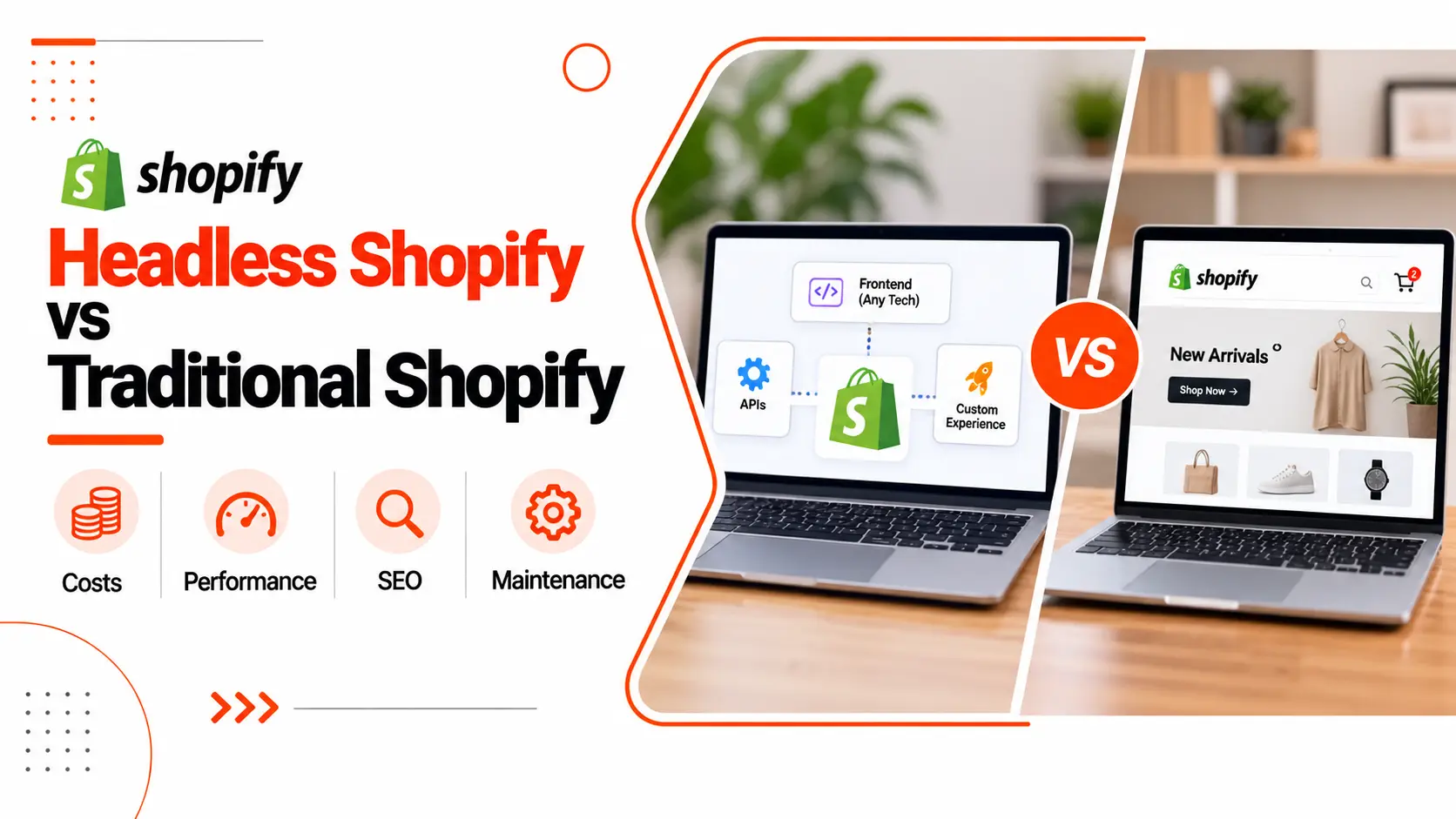
Headless and composable commerce are often discussed together, but they solve different architecture problems. Headless separates the customer-facing storefront from the commerce backend, while composable commerce extends modularity across multiple business capabilities. This guide compares both approaches across cost, performance, maintenance, B2B, multi-storefront operations and development complexity to help ecommerce businesses decide which architecture actually fits their requirements in 2026. Headless Commerce vs Composable Commerce: Which Is Better for Ecommerce in 2026?[...]
WooCommerce

WooCommerce Performance Optimization: How to Make Your Store Faster in 2026

A slow WooCommerce store can hurt product discovery, customer experience and checkout performance. This guide explains how to identify what is making WooCommerce slow and where businesses should focus first in 2026. Learn how hosting, caching, themes, plugins, images, databases, third-party scripts, product catalogs and integrations affect performance, plus when deeper development work may be required. WooCommerce Performance Optimization: How to Make Your Store Faster in 2026[...]
BigCommerce

Top BigCommerce Agencies in Gujarat for Manufacturing & Industrial Brands

Manufacturing and industrial ecommerce requires more than a standard online storefront. This guide compares BigCommerce agencies in Gujarat and agencies serving Gujarat businesses based on BigCommerce expertise, B2B capabilities, catalog experience, custom development, ERP and PIM integrations, and technical project fit. Compare DIT India, 9eCommerce, DIT Interactive, ioVista, Jstechno Solutions, Brevia Tech Solutions, and DRC Systems before choosing a development partner for your manufacturing or industrial ecommerce project. Top BigCommerce Agencies in Gujarat for Manufacturing & Industrial Brands[...]
BigCommerce

How Much Do BigCommerce Development Cost in India in 2026?

How much does BigCommerce development cost in India in 2026? A simple store may start around ₹80,000, while custom, B2B, headless, and enterprise projects can run into several lakhs. This guide explains realistic BigCommerce development pricing, platform costs, design and migration expenses, API integrations, B2B requirements, hidden costs, and the factors businesses should compare before hiring a BigCommerce development company in India. How Much Do BigCommerce Development Cost in India in 2026?[...]

Recommended

All Posts

Uncategorized

Headless Commerce vs Composable Commerce: Which Is Better for Ecommerce in 2026?

Frequently Asked Questions

Headless commerce separates the frontend storefront from the commerce backend and connects them through APIs. Composable commerce takes modularity further by allowing several commerce capabilities, such as CMS, search, PIM or personalization, to be selected and managed independently. A headless storefront can therefore be part of a composable architecture without necessarily making the entire system composable.

Composable ecommerce architectures commonly use a headless experience layer because independent frontend and backend components support modularity. However, composability is a broader concept focused on assembling and replacing business capabilities independently. The important distinction is that headless primarily concerns presentation-layer separation, while composability applies across more of the technology stack.

Headless will often have a lower total implementation burden because a business may retain one commerce platform for most backend functions. Composable commerce can involve several vendors, integrations, monitoring systems and contracts. Actual cost depends on storefront complexity, integrations, migration requirements, hosting, internal skills and the number of independently managed services.

Either can work for enterprise ecommerce. Headless suits enterprises that need custom customer experiences while retaining a strong commerce core. Composable can be better when different capabilities genuinely require independent platforms or release cycles. Enterprise size alone is not a reason to choose composable commerce. Architecture should reflect operational complexity and technology ownership.

Yes, particularly when a B2B business needs a custom buyer portal or storefront while keeping backend capabilities such as company accounts, catalogs, pricing and ordering on an ecommerce platform. More complex B2B ecosystems involving ERP, CPQ, PIM and other specialized systems may justify a more composable architecture.

Headless gives development teams greater frontend control, which can support strong performance, but it does not automatically make an ecommerce site faster. Rendering strategy, API latency, caching, image delivery, JavaScript, CDN configuration and third-party services still matter. A poorly designed headless storefront can perform worse than a well-built traditional storefront.

Headless commerce can support excellent SEO when crawlability, rendering, canonical URLs, structured data, internal links, metadata and sitemaps are implemented correctly. The architecture itself does not provide an SEO advantage automatically. Search problems tend to appear when frontend implementations rely on poor rendering strategies or overlook basic technical SEO requirements.

Cost varies considerably according to architecture, storefront complexity, integrations, backend platform, CMS, migration and ongoing support requirements. A business should request an architecture-based estimate rather than relying on a generic fixed figure. Proposals should separate discovery, UX, frontend development, integrations, QA, deployment and post-launch support so the cost can be evaluated properly.

Look for proven experience across both frontend and backend commerce architecture. A qualified partner should understand APIs, ecommerce platforms, React or Next.js, CMS integration, checkout, payments, ERP systems, DevOps, SEO and QA. More importantly, they should explain why headless is appropriate for your requirements instead of recommending it automatically.

WooCommerce

WooCommerce Performance Optimization: How to Make Your Store Faster in 2026

Frequently Asked Questions

WooCommerce stores can become slow because of hosting limits, heavy themes, plugins, large images, database queries, tracking scripts, product variations or external integrations. Start by testing different page types and measuring server, browser and database performance. Avoid installing random speed plugins until you know which part of the store is creating the delay.

Start with measurement. Check hosting response time, Core Web Vitals, image size, theme assets, plugins, database queries and third-party scripts. Configure caching correctly and consider a CDN for static assets. Complex stores may also need code-level work, database tuning or changes to how external integrations run.

There is no single WooCommerce-specific load-time target. Google's Core Web Vitals are more useful benchmarks. Aim for LCP of 2.5 seconds or less, INP of 200 milliseconds or less and CLS of 0.1 or less at the 75th percentile of visits. Real checkout and product-page behavior should also be tested.

Not automatically. Large catalogs can perform well when hosting, database queries, indexing, search, filters and product data are designed properly. Problems usually appear when catalog size combines with complex variations, inefficient queries, large metadata tables or heavy filtering. A store with 50,000 products needs a different technical approach from one with 100.

Some can, but plugin count alone is a poor measure. One inefficient plugin can consume more resources than several lightweight plugins. Test database queries, PHP execution, frontend assets, AJAX requests and background jobs before deciding which plugin is responsible. Removing plugins without investigation can also remove features without solving the performance problem.

Yes. Hosting affects CPU availability, memory, PHP processing, database response and the store's ability to handle simultaneous requests. Large catalogs, logged-in users, checkout traffic and background jobs can increase resource requirements. Before moving providers, confirm that server resources are actually limiting performance rather than inefficient code or database activity.

A CDN can improve delivery of images, CSS, JavaScript and other static files, particularly for customers far from the origin server. It does not fix every performance problem. Slow database queries, inefficient PHP code or delayed external APIs still need to be addressed at the application or server level.

Measure which checkout requests are slow first. Payment gateways, shipping rates, tax services, address validation and custom business rules can all introduce delays. Avoid blindly caching checkout pages. Review AJAX activity, API response times, database queries and unnecessary scripts, then test changes in staging before releasing them to customers.

Pricing depends on the problem. A basic performance audit and frontend cleanup costs far less than work involving custom code, database architecture, checkout logic, ERP integrations or large catalogs. When comparing WooCommerce development services in India, request a defined audit scope, expected deliverables, testing process and assumptions rather than choosing only by hourly rate.

Hire a WooCommerce expert developer in India when basic performance changes do not solve the issue or when custom themes, integrations, checkout logic, B2B functionality, database queries or large catalogs are involved. An experienced developer should diagnose the bottleneck first, explain the risks and test changes in staging before making production changes.

BigCommerce

How Much Do BigCommerce Development Cost in India in 2026?

Frequently Asked Questions

BigCommerce website development in India can start around ₹80,000 for a relatively simple implementation and exceed ₹20 lakh for enterprise, headless, B2B, or integration-heavy projects. A custom mid-market store commonly requires a budget of roughly ₹2 lakh to ₹5 lakh, depending on design, migration, catalog complexity, apps, and integrations.

It depends on the project. Platform subscription prices are only one part of total ecommerce cost. BigCommerce can become attractive for businesses needing B2B functionality, complex catalogs, APIs, multi-storefront capabilities, or integrations. Development costs for both platforms rise significantly once custom architecture, ERP systems, headless frontends, or complicated business rules are involved.

A straightforward BigCommerce store may take around four to eight weeks. A custom mid-market project can take eight to sixteen weeks, while B2B, headless, migration-heavy, or enterprise implementations may require several months. Timelines depend on design approvals, data quality, integrations, third-party dependencies, testing, and how quickly business requirements are finalized.

Rates vary considerably by skill and engagement model. Rather than comparing only hourly rates, businesses should compare total project scope and experience. A developer capable of complex API, B2B, headless, or ERP work will generally cost more than someone configuring themes, but may require far fewer hours to solve technically difficult problems correctly.

Yes. Products, customers, categories, images, orders and other data can be migrated from platforms such as Shopify, Magento, WooCommerce and custom ecommerce systems. The difficult part is usually preserving custom data, URL structures, integrations and business rules. A proper migration should also include redirects, data validation, testing, and an SEO transition plan.

Yes. BigCommerce offers B2B capabilities around company accounts, buyer experiences, pricing, quotes, APIs, and related workflows. B2B projects still need careful implementation because every wholesaler has different pricing, approval, ordering, payment, and ERP requirements. The platform provides the foundation, while development connects it to the company's actual processes.

Use a custom theme when your brand, merchandising, UX, or conversion requirements can't be met effectively with an existing theme. Smaller brands can often launch faster with a commercial theme and focused modifications. Growing retailers may benefit from custom UX once they understand customer behaviour and have enough sales volume to justify the development investment.

Yes, generally. Headless BigCommerce introduces a separate frontend application and requires API integration, frontend hosting, development, testing, monitoring, and ongoing maintenance. It can make sense for businesses with unusual content or commerce requirements, but choosing headless simply because it's fashionable usually creates unnecessary cost.

A good quote should define design, theme development, templates, catalog work, migration, integrations, apps, payment setup, shipping configuration, responsive development, QA, SEO redirects, deployment, documentation, warranty support, exclusions, third-party costs, and assumptions. If the proposal simply says "BigCommerce website development" with one price, ask for more detail.

Review its actual BigCommerce experience, technical capability, migration knowledge, API experience, B2B understanding, QA process, communication, and ongoing support model. Ask the agency to explain how it would approach your specific requirements. A technically credible team should be able to discuss risks and limitations, not just promise that every requested feature is easy.

Got a Project or Partnership in Mind?

    100% secure, no spam.