



BigCommerce

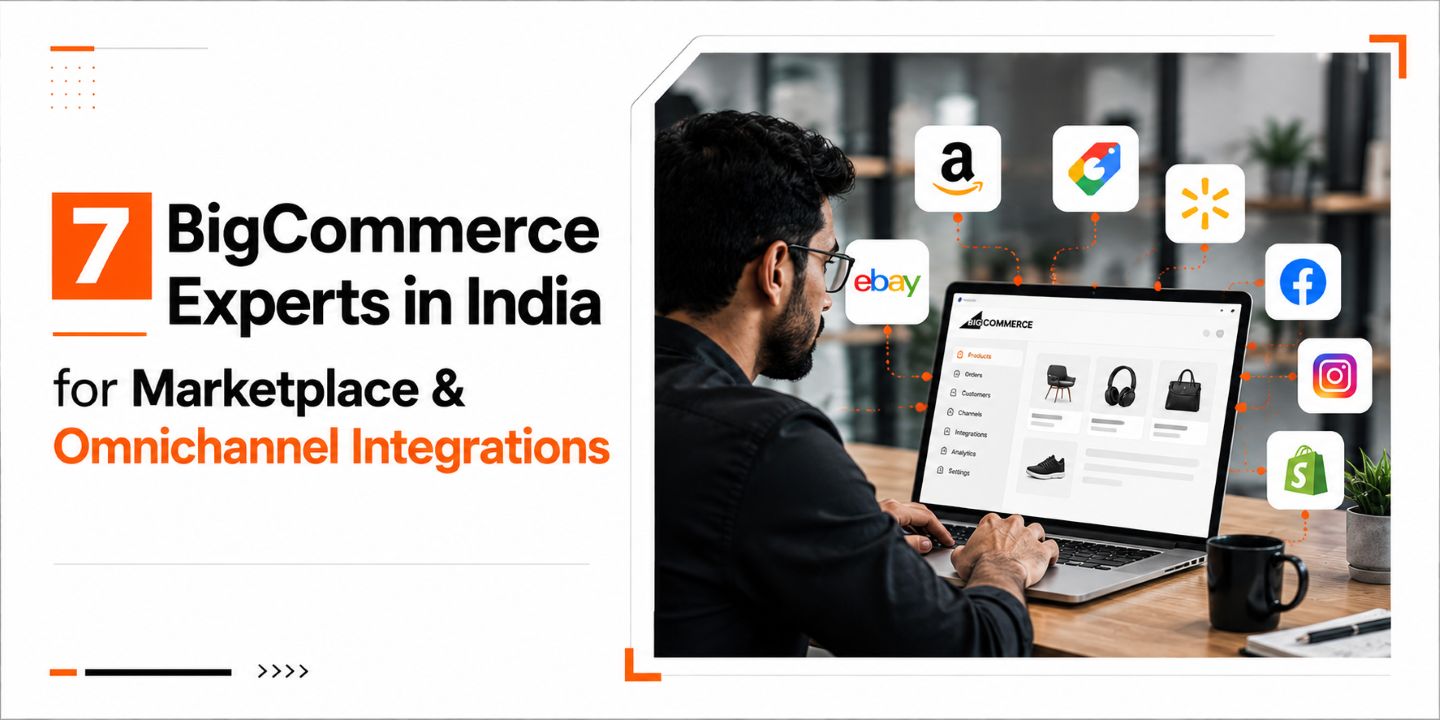
7 BigCommerce Experts in India for Marketplace and Omnichannel Integrations

Looking for BigCommerce experts in India for marketplace or omnichannel integrations? This guide compares seven companies across BigCommerce development, APIs, marketplace connectivity, ERP and PIM integration, inventory synchronization, B2B, custom applications, and ongoing support. Explore different capabilities and understand what to evaluate before selecting a BigCommerce development partner for a connected ecommerce ecosystem. 7 BigCommerce Experts in India for Marketplace and Omnichannel Integrations[...]
Uncategorized

How to Prepare Your Shopify Store for Shopping Through ChatGPT Gemini and AI Search

AI shopping is changing how customers discover, compare, and buy products from Shopify stores. Instead of starting every purchase with a traditional search query, shoppers can now ask ChatGPT, Gemini, Google AI Mode, Copilot, and other AI search tools for recommendations based on fit, budget, use case, style, urgency, and personal preferences. Preparing your store […] How to Prepare Your Shopify Store for Shopping Through ChatGPT Gemini and AI Search[...]
AI Ecommerce Development

10 AI Shopping Agent Development Companies in India for Ecommerce Brands

Compare 10 AI shopping agent development companies in India working across conversational commerce, product discovery, recommendation systems, live catalog integration, visual shopping, cart actions, and agentic commerce. This guide looks at the different development approaches ecommerce brands can consider when introducing AI into the buying journey. 10 AI Shopping Agent Development Companies in India for Ecommerce Brands[...]
BigCommerce

How BigCommerce Brands Can Prepare Product Catalogs for AI Shopping Engines

AI shopping engines are changing how customers discover and compare products. This guide explains how BigCommerce brands can prepare their catalogs with clearer titles, structured attributes, useful descriptions, accurate variants, reliable inventory, product identifiers, better images, structured data, and stronger product feeds. How BigCommerce Brands Can Prepare Product Catalogs for AI Shopping Engines[...]

Recommended

All Posts

Headless Commerce

Headless Commerce for AI Agents: How to Build an Agent-Ready Ecommerce Architecture

Frequently Asked Questions

Headless commerce for AI agents separates the ecommerce backend from individual customer interfaces and exposes approved commerce capabilities through APIs or similar controlled interfaces. This allows websites, mobile applications, and AI assistants to access product, search, inventory, cart, and other commerce information without depending entirely on traditional web pages.

An agent-ready ecommerce system needs structured product data, accessible search, reliable APIs, current pricing and inventory, authentication, permission controls, and dependable backend business rules. AI agents should be able to retrieve accurate information without receiving unrestricted access to the ecommerce database or administrative systems.

Not always. AI shopping capabilities can also be introduced on traditional ecommerce platforms. Headless architecture becomes particularly useful when a business wants websites, mobile applications, AI assistants, and future channels to access the same commerce services independently.

Headless ecommerce solutions in India can help businesses separate frontend experiences from commerce functionality, connect multiple business systems, expose structured APIs, and support new customer channels. For AI commerce, this makes it easier to provide agents with controlled access to product search, inventory, pricing, carts, and other approved functions.

AI agents can access product information through approved APIs, catalog services, search systems, or agent-specific protocols. Product information should be structured so attributes such as price, size, material, compatibility, variants, and availability can be retrieved reliably rather than inferred from visual web pages.

Yes, when the ecommerce architecture provides an authorized cart API or equivalent service. The agent should send the requested product and quantity to the commerce platform, which then validates availability and creates or updates the cart. The AI should not bypass the platform's normal commerce rules.

It can be, provided the architecture uses proper authentication, authorization, validation, logging, and permission controls. Agents should receive only the minimum access required for each task. Sensitive customer or administrative information should never become publicly accessible simply because an AI interface has been introduced.

Look beyond frontend development. A suitable headless ecommerce development company in India should understand ecommerce APIs, authentication, PIM, ERP, CRM, OMS, search, payments, integrations, cloud infrastructure, security, and performance. For AI projects, ask specifically about structured data, agent permissions, real-time commerce information, and monitoring.

Usually not. Start by reviewing the current product data, APIs, search, inventory, pricing, customer authentication, carts, checkout, and integrations. Businesses with an existing headless architecture may already have much of the required foundation and may only need targeted architectural improvements.

Start with an architecture and product-data audit. Identify where product information, inventory, pricing, search, customer data, orders, and business rules currently live. Then determine which capabilities are already available through APIs and where better structured data, integrations, permissions, or monitoring are required.

Shopify

10 Shopify Plus Development Companies in India for Enterprise Ecommerce Brands in 2026

Frequently Asked Questions

Shopify Plus development companies in India include DIT India, 9eCommerce, DIT Interactive, Binary, Dynamic Dreamz, Crawlapps, Codilar Technologies, ENS Enterprises, Swift Expand, and BEZOHMINDS. Businesses should compare their Shopify capabilities, enterprise experience, integrations, migrations, B2B expertise, and support based on project requirements.

Look for relevant Shopify experience, similar ecommerce projects, custom development capabilities, migration knowledge, integrations, B2B experience, performance expertise, and post-launch support. Enterprise brands should prioritize companies with experience that closely matches their technical and operational requirements.

Enterprise brands should look for experience with complex Shopify stores, migrations, APIs, integrations, B2B, international commerce, custom applications, checkout requirements, and performance. Relevant case studies can help determine whether the developers have worked on projects with similar technical requirements.

Shopify Plus development costs depend on the scope of the project. Store design, custom functionality, migration, ERP integration, B2B features, custom applications, and international storefronts can all affect development costs. Businesses should request a detailed project estimate based on documented requirements.

Development timelines depend on the size and complexity of the project. Design, product data, migration, integrations, custom functionality, B2B requirements, testing, and stakeholder approvals can all affect the schedule. Enterprise projects should be estimated after a proper requirements discovery process.

Yes. Shopify Plus supports enterprise ecommerce requirements including B2B, international selling, custom development, integrations, automation, and high-volume commerce. Businesses should still evaluate their specific operational and technical requirements before selecting an ecommerce platform.

Yes. Shopify can connect with ERP, CRM, PIM, OMS, inventory, fulfillment, and other systems through APIs, applications, middleware, or integration platforms. The appropriate approach depends on the systems involved and the required data synchronization.

Yes. Existing ecommerce stores can migrate to Shopify Plus. Depending on the source platform, migration can include products, customers, orders, images, metadata, URLs, redirects, and integrations. Established stores should also plan carefully for SEO and data validation during migration.

Yes. Shopify Plus supports B2B ecommerce requirements. Depending on the business, additional configuration or development may be needed for company accounts, catalogs, pricing, purchasing workflows, integrations, and other wholesale requirements.

Ask about comparable Shopify Plus projects, migration experience, integrations, B2B work, custom applications, development processes, testing, SEO migration, project communication, deployment, and post-launch support. For complex projects, also discuss how the company handles APIs, middleware, monitoring, and integration failures.

Shopify

Shopify Agentic Commerce in 2026: How AI Shoppers Are Changing Product Discovery and Checkout

Frequently Asked Questions

Shopify agentic commerce refers to AI-assisted shopping where software agents can help customers find products, compare options, build carts and move toward checkout. The goal is to reduce the amount of manual work shoppers need to do during product discovery and buying.

AI shoppers can use structured product information, catalog data and commerce integrations to match products against customer requirements. Clear titles, accurate specifications, current inventory and useful product descriptions can make products easier for AI systems to understand.

Shopify Agentic Storefronts are designed to help eligible merchants make products available inside AI-powered shopping experiences. This can allow product discovery to happen outside the merchant’s traditional online storefront.

Shopify Catalog provides structured commerce information that can help AI systems understand products, prices, variants and other product details. It supports product discovery without requiring an AI system to interpret every merchant website independently.

Not completely. Google search, marketplaces, social media and ecommerce websites will still play major roles in discovery. AI shopping is more likely to become another discovery channel, particularly for shoppers who want fast comparisons or personalized recommendations.

Yes. Websites remain important for branding, storytelling, trust, browsing and complex buying decisions. Agentic commerce is more likely to complement storefronts than completely replace them.

Start by improving product data. Keep titles, prices, variants, availability, specifications, shipping details and policies accurate. Clear information makes it easier for both customers and AI systems to understand whether a product is a good match.

Yes. Traditional SEO still matters, but merchants also need to think about machine understanding. Detailed product attributes, clear descriptions, structured data and useful merchant information can become more important as AI systems play a larger role in product discovery.

WooCommerce

How Much Does WooCommerce Development Cost in India? Complete Pricing Guide

Frequently Asked Questions

A professional WooCommerce website in India can cost around ₹40,000 for a basic store and several lakhs for a more customized ecommerce project. Design, product complexity, integrations, checkout requirements and ongoing support all affect the final development price.

WooCommerce developers in India may charge hourly, monthly or by project. Pricing varies based on experience and technical complexity. Developers with strong experience in APIs, checkout customization, performance and integrations generally cost more than developers focused mainly on basic theme setup.

A freelancer can work well for a smaller project. For larger stores involving design, backend development, APIs, integrations, QA and ongoing support, an agency can be easier to manage because multiple specialists work together.

A WooCommerce development company may handle store setup, custom themes, plugin development, payment gateways, shipping integrations, product migration, API work, testing, performance, deployment and maintenance.

Yes, WooCommerce itself is free and open source. You’ll still need to budget for hosting, development, premium extensions, maintenance, payment processing and other services required to operate the store.

A simple WooCommerce store may take around 2 to 5 weeks. A more customized project may take 6 to 12 weeks, while advanced stores with complex integrations can take 12 weeks or longer.

Look for someone with real WooCommerce experience, not only general WordPress development. Ask about checkout work, APIs, payment gateways, integrations, performance, deployment and post-launch maintenance.

It can be worth it if your business has continuous development needs. A dedicated developer can handle improvements, bug fixes, integrations, maintenance and feature updates without treating every change as a completely new project.

Got a Project or Partnership in Mind?

    100% secure, no spam.