



BigCommerce

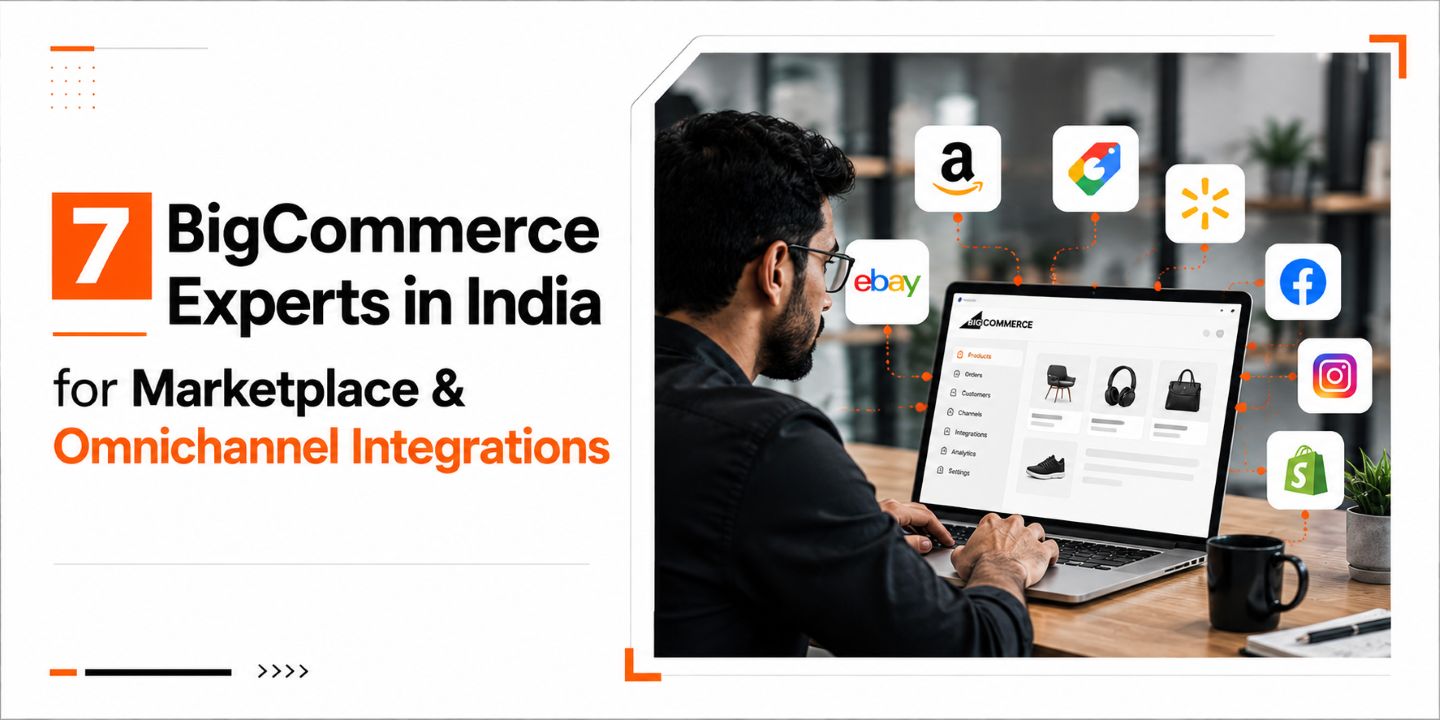
7 BigCommerce Experts in India for Marketplace and Omnichannel Integrations

Looking for BigCommerce experts in India for marketplace or omnichannel integrations? This guide compares seven companies across BigCommerce development, APIs, marketplace connectivity, ERP and PIM integration, inventory synchronization, B2B, custom applications, and ongoing support. Explore different capabilities and understand what to evaluate before selecting a BigCommerce development partner for a connected ecommerce ecosystem. 7 BigCommerce Experts in India for Marketplace and Omnichannel Integrations[...]
Uncategorized

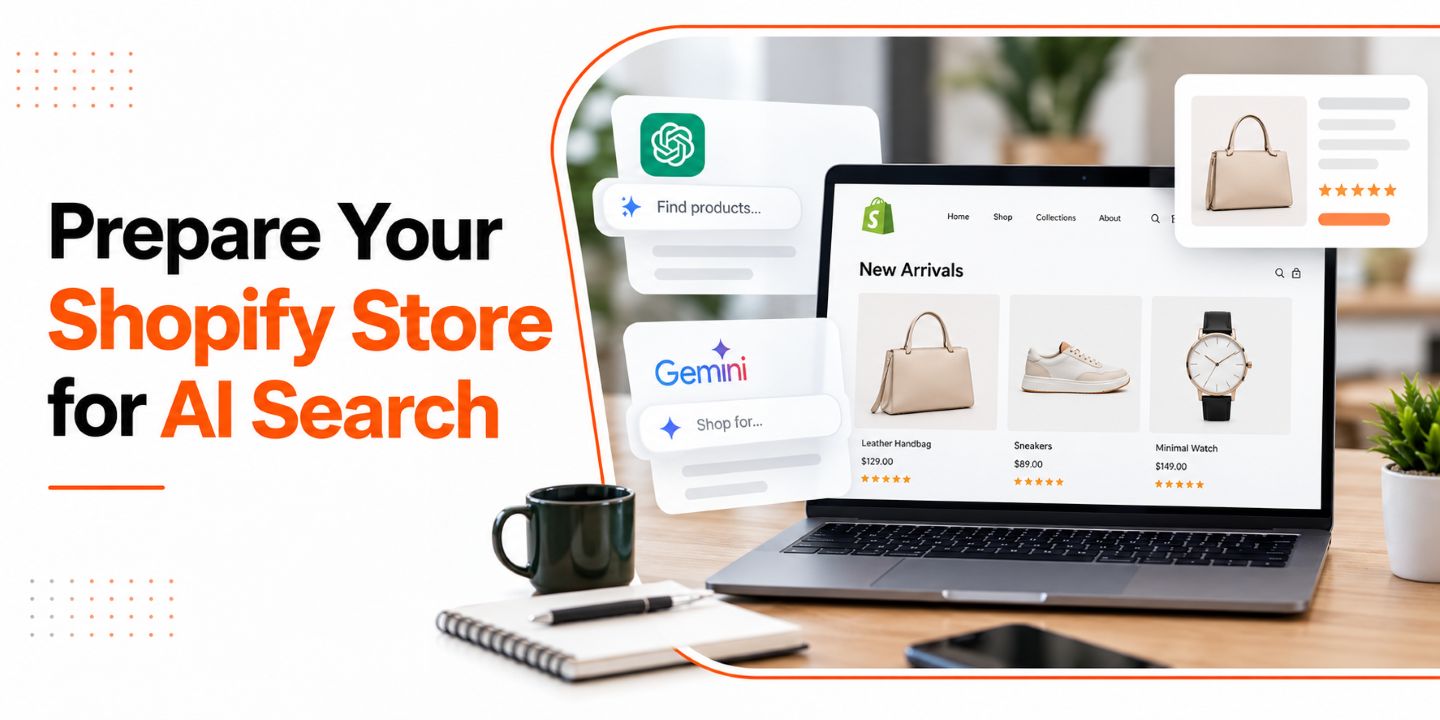
How to Prepare Your Shopify Store for Shopping Through ChatGPT Gemini and AI Search

AI shopping is changing how customers discover, compare, and buy products from Shopify stores. Instead of starting every purchase with a traditional search query, shoppers can now ask ChatGPT, Gemini, Google AI Mode, Copilot, and other AI search tools for recommendations based on fit, budget, use case, style, urgency, and personal preferences. Preparing your store […] How to Prepare Your Shopify Store for Shopping Through ChatGPT Gemini and AI Search[...]
AI Ecommerce Development

10 AI Shopping Agent Development Companies in India for Ecommerce Brands

Compare 10 AI shopping agent development companies in India working across conversational commerce, product discovery, recommendation systems, live catalog integration, visual shopping, cart actions, and agentic commerce. This guide looks at the different development approaches ecommerce brands can consider when introducing AI into the buying journey. 10 AI Shopping Agent Development Companies in India for Ecommerce Brands[...]
BigCommerce

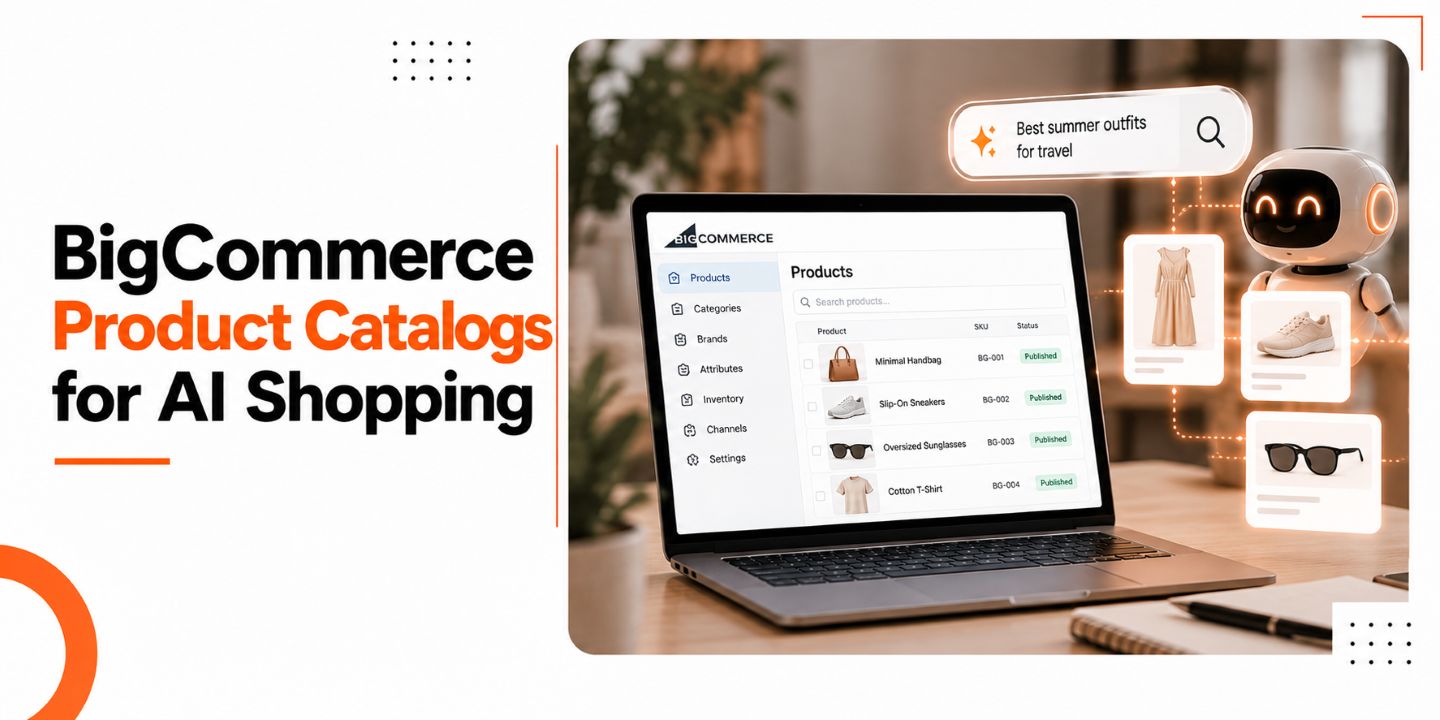
How BigCommerce Brands Can Prepare Product Catalogs for AI Shopping Engines

AI shopping engines are changing how customers discover and compare products. This guide explains how BigCommerce brands can prepare their catalogs with clearer titles, structured attributes, useful descriptions, accurate variants, reliable inventory, product identifiers, better images, structured data, and stronger product feeds. How BigCommerce Brands Can Prepare Product Catalogs for AI Shopping Engines[...]

Recommended

All Posts

Headless Commerce

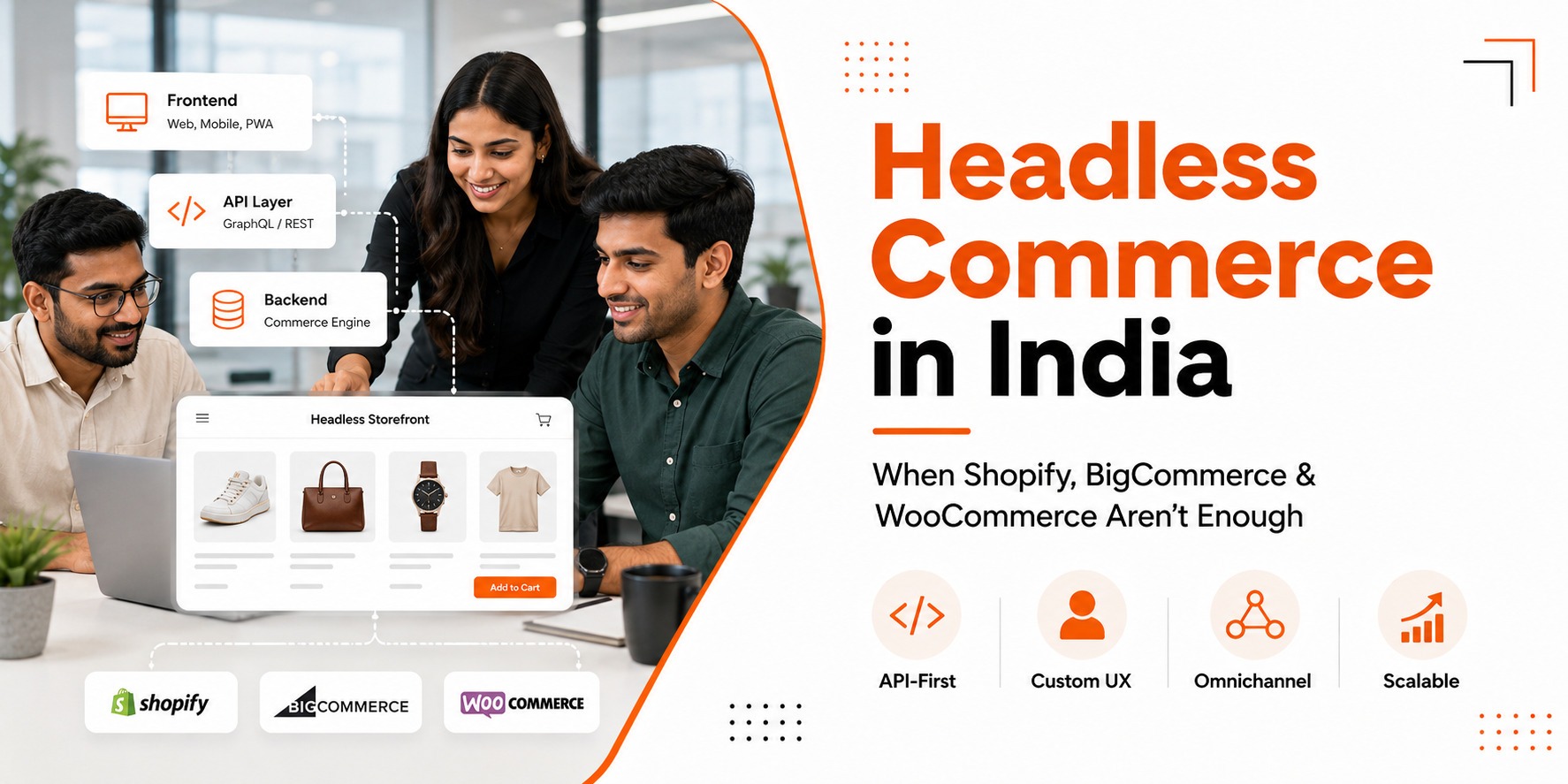
Headless Commerce Development in India: When Shopify, BigCommerce, or WooCommerce Is Not Enough

Frequently Asked Questions

A headless solution separates the customer-facing storefront from the ecommerce backend. The frontend uses APIs to access products, carts, customers, and other commerce functions managed by the platform.

Not always. Headless is useful for advanced design, multiple channels, content-heavy experiences, and complex integrations. A traditional store is often cheaper, faster to launch, and easier to maintain.

The cost depends on the frontend design, platform, CMS, catalogue, checkout, integrations, search, regional setup, and support requirements. A discovery phase is usually needed before giving a dependable estimate.

A focused headless storefront may take a few months. Projects involving multiple regions, custom integrations, migration, account features, advanced search, and extensive testing generally require a longer timeline.

Yes, but the process requires careful planning. Product data, checkout, customer accounts, apps, SEO URLs, analytics, content, and integrations must be reviewed before replacing the existing storefront.

It can provide greater control over rendering, caching, and code delivery, but speed is not guaranteed. Performance still depends on frontend quality, API usage, hosting, scripts, images, and monitoring.

Not necessarily. A separate CMS is useful when marketers manage substantial editorial, campaign, or regional content. Stores with limited content may use the commerce platform or a simpler content setup.

Ongoing support usually covers frontend updates, API changes, hosting, monitoring, security, integrations, performance, analytics, testing, and new features. Headless stores need continuous technical ownership.

BigCommerce

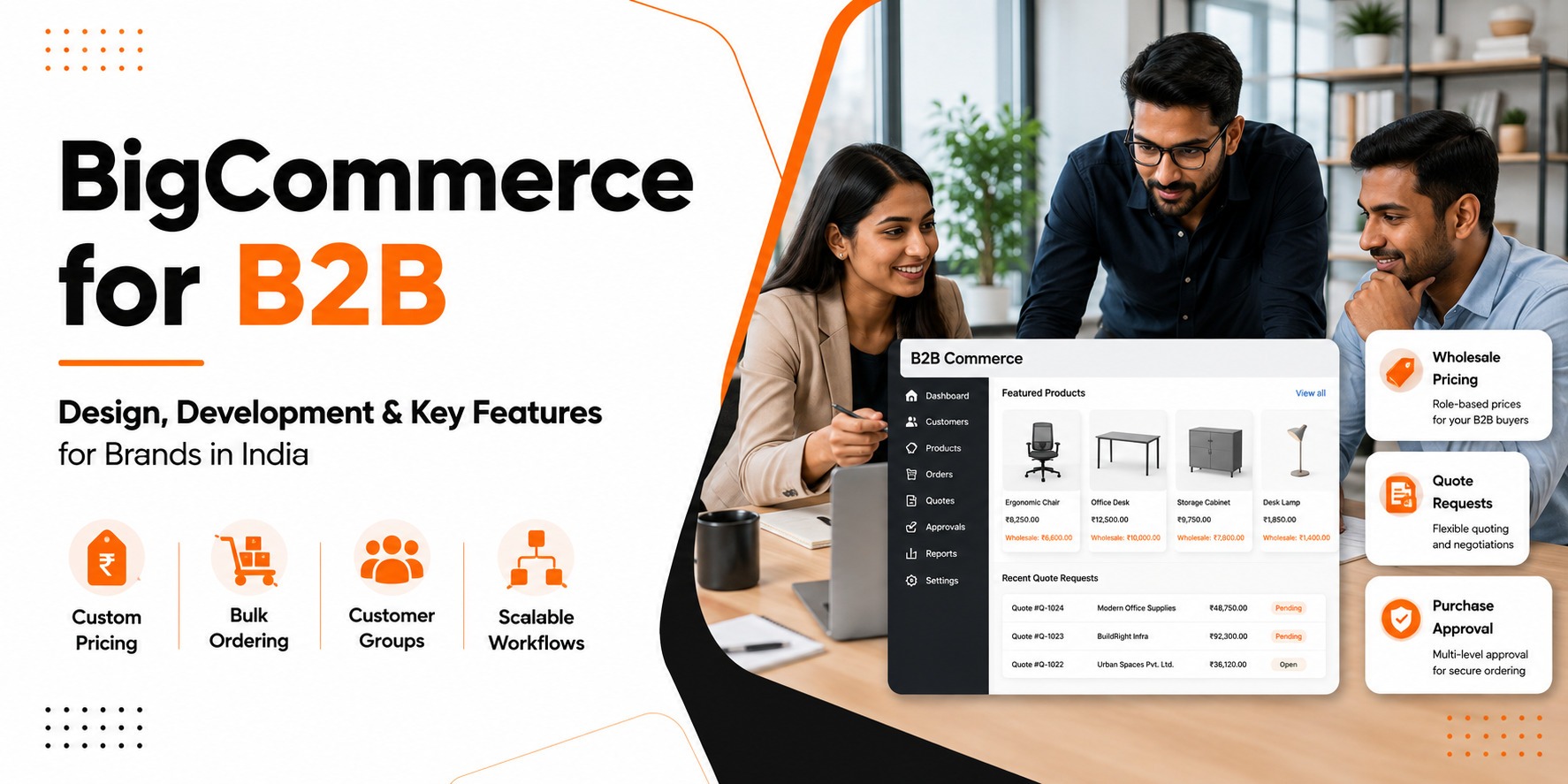
BigCommerce Design and Development for B2B Brands in India: Features That Matter Most

Frequently Asked Questions

Yes. BigCommerce can support company accounts, buyer roles, custom pricing, quotes, invoices, bulk ordering, multiple storefronts, and integrations required by wholesalers, manufacturers, and distributors.

BigCommerce B2B Edition extends the platform with business purchasing features such as company accounts, buyer permissions, quote workflows, invoices, order history, and a dedicated buyer portal.

Yes. Pricing can be structured around customer groups, price lists, company agreements, volume, and integrations. The final approach depends on the store plan, catalogue, and source of pricing data.

Yes. B2B workflows can support quote requests, seller responses, negotiated pricing, and conversion into orders. The process should be configured around the company’s existing sales and approval rules.

BigCommerce B2B setups can support purchase-order and invoice-based workflows for approved buyers. Credit terms, limits, and payment status may also need integration with accounting or ERP systems.

Yes. BigCommerce APIs and integration tools can connect the store with ERP, PIM, CRM, accounting, warehouse, and fulfilment systems. Data ownership and synchronization rules should be defined first.

A basic storefront may take several weeks. A larger B2B project involving custom pricing, buyer portals, quotes, data migration, multiple storefronts, and ERP integrations generally requires more time.

A custom theme is useful when standard themes cannot support the required catalogue, ordering workflow, brand design, or account experience. Businesses should customize only where there is a clear need.

Headless Commerce

Best 7 Headless Commerce Agencies in Gujarat for D2C and Retail Brands (2026)

Frequently Asked Questions

Headless commerce separates the storefront from the ecommerce backend. The backend manages products, customers, orders, and checkout, while the frontend is developed separately and connected through APIs.

DIT India, 9Ecommerce, and DIT Interactive are suitable for multi-platform and customized projects. Memento Technologies and Everon Labs are more focused on Shopify, while MavenBird supports Shopify Plus, BigCommerce, and Magento.

The cost depends on the backend platform, frontend framework, design, integrations, content management, migration, hosting, and maintenance. A headless store usually costs more than a standard theme-based ecommerce website.

Yes, especially for brands requiring faster mobile experiences, custom product storytelling, content-led shopping journeys, multiple storefronts, or complex integrations. Smaller brands with basic requirements may not need a headless setup.

Shopify, Shopify Plus, BigCommerce, Magento, WooCommerce, and custom commerce platforms can support headless architecture through APIs.

It can improve speed when the frontend, APIs, hosting, images, caching, and third-party scripts are properly optimized. Headless architecture alone does not guarantee better performance.

Yes. A business can retain its current ecommerce backend and replace the storefront, provided the platform APIs support the required products, checkout, customer accounts, applications, and integrations.

ShopifyWooCommerce

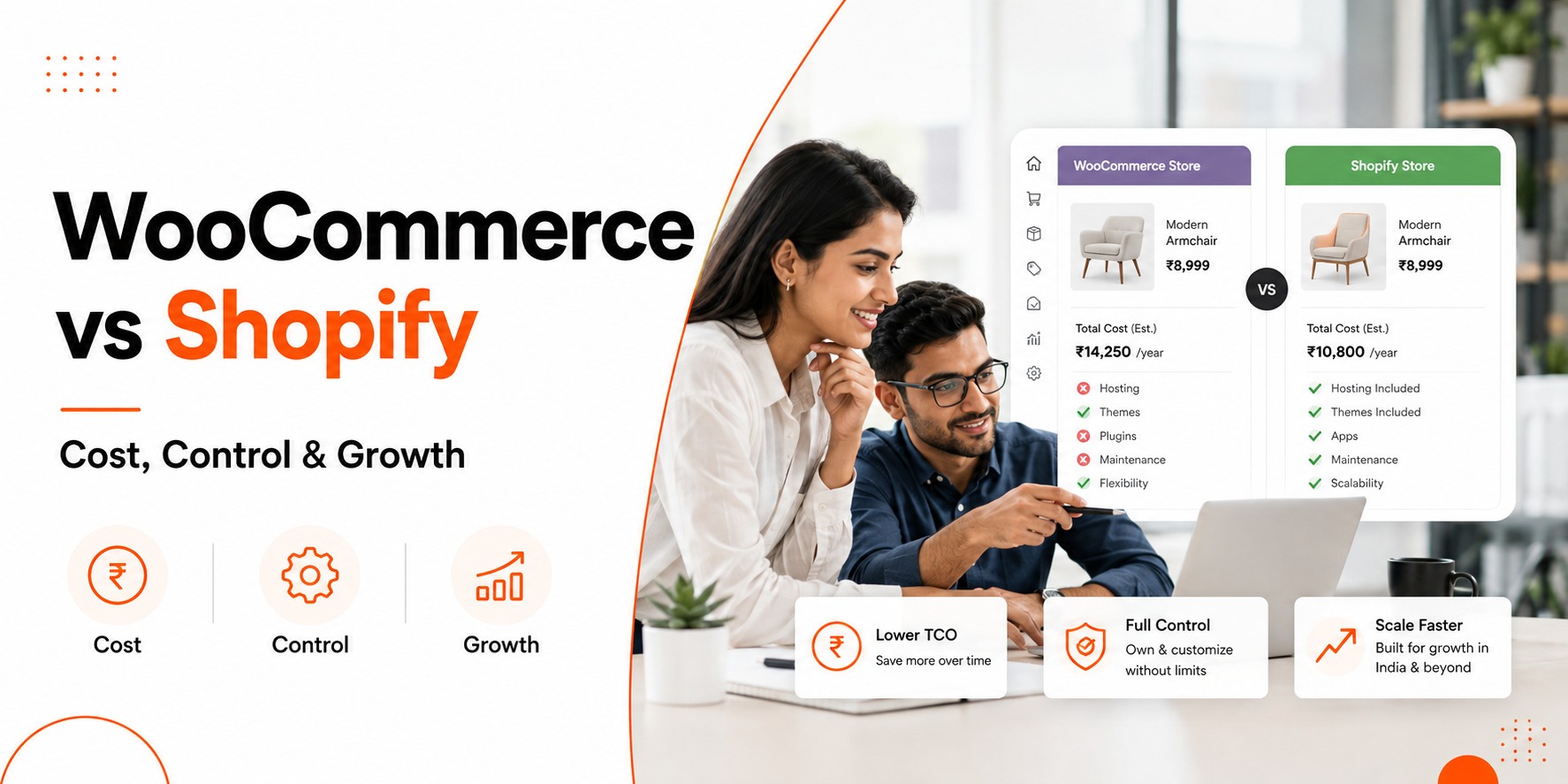
WooCommerce vs Shopify for Indian Businesses: Cost, Control, and Growth Compared

Frequently Asked Questions

WooCommerce has no core subscription, but the business must pay for hosting, extensions, development, security, and maintenance. Shopify charges a subscription that includes hosting and core infrastructure. WooCommerce may be cheaper for a basic store, but complex stores can cost more to maintain.

Yes. Shopify is suitable for small businesses that want to launch quickly and avoid managing servers. Merchants should still calculate payment-gateway fees, applications, design, and transaction costs before selecting a plan.

Yes. Cash on delivery can be configured as a manual payment method, and Shopify does not charge third-party transaction fees on manual payments.

Yes. WooCommerce can support UPI through compatible Indian payment-gateway plugins or custom API integrations. The integration should be tested for refunds, webhooks, payment failures, and order updates.

WooCommerce provides greater direct control over hosting, code, databases, templates, and checkout behaviour. Shopify provides extensive customization through themes, applications, APIs, and custom development but remains a managed platform.

Businesses should hire expert Shopify developers in India when they need custom theme development, migration, application integrations, speed improvements, complex catalogue configuration, or long-term technical support.

A business should hire a dedicated WooCommerce developer in India when it requires custom plugins, specialized checkout logic, ERP integration, performance optimization, migration, or ongoing technical maintenance.

Shopify is generally easier to scale operationally because infrastructure is managed. WooCommerce can offer greater long-term flexibility and ownership, but the business must invest in suitable hosting, security, architecture, and maintenance.

Got a Project or Partnership in Mind?

    100% secure, no spam.