


Frequently Asked Questions
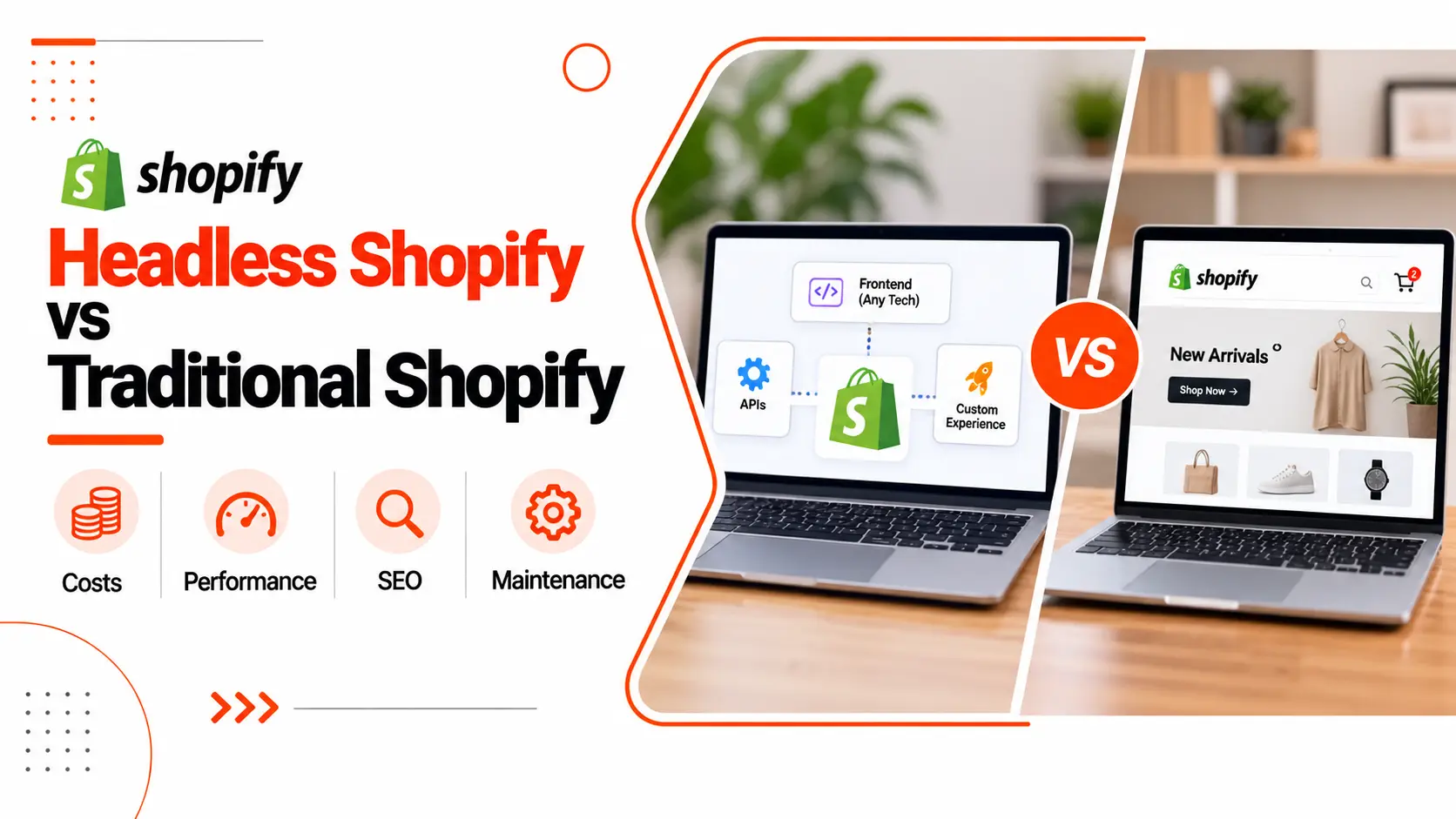
A headless solution separates the customer-facing storefront from the ecommerce backend. The frontend uses APIs to access products, carts, customers, and other commerce functions managed by the platform.
Not always. Headless is useful for advanced design, multiple channels, content-heavy experiences, and complex integrations. A traditional store is often cheaper, faster to launch, and easier to maintain.
The cost depends on the frontend design, platform, CMS, catalogue, checkout, integrations, search, regional setup, and support requirements. A discovery phase is usually needed before giving a dependable estimate.
A focused headless storefront may take a few months. Projects involving multiple regions, custom integrations, migration, account features, advanced search, and extensive testing generally require a longer timeline.
Yes, but the process requires careful planning. Product data, checkout, customer accounts, apps, SEO URLs, analytics, content, and integrations must be reviewed before replacing the existing storefront.
It can provide greater control over rendering, caching, and code delivery, but speed is not guaranteed. Performance still depends on frontend quality, API usage, hosting, scripts, images, and monitoring.
Not necessarily. A separate CMS is useful when marketers manage substantial editorial, campaign, or regional content. Stores with limited content may use the commerce platform or a simpler content setup.
Ongoing support usually covers frontend updates, API changes, hosting, monitoring, security, integrations, performance, analytics, testing, and new features. Headless stores need continuous technical ownership.