



BigCommerce

BigCommerce Store Redesign: Signs Your Ecommerce Business Needs an Upgrade

The way customers experience your website will define the way they think about your brand and its products, ease of navigation, and whether they would consider making a purchase from you. With ecommerce constantly changing and customers’ needs continuously getting higher, what used to work effectively several years ago might not be sufficient enough to […] BigCommerce Store Redesign: Signs Your Ecommerce Business Needs an Upgrade[...]
Magento

Magento Is Not Dead: Why Large Ecommerce Businesses Still Choose Magento in 2026

Over the past years, Magento has been regarded as one of the best ecommerce platforms available in the market. Nonetheless, as new ecommerce platforms have come into the market, the following query arises again and again: “Is Magento still relevant?” Many people think that Magento has been superseded by new ecommerce platforms, while others think […] Magento Is Not Dead: Why Large Ecommerce Businesses Still Choose Magento in 2026[...]
Headless Commerce

Headless Commerce vs Traditional Ecommerce: Which Solution Is Right for Your Business?

Ecommerce architecture selection may be considered one of the key decisions in a company’s activity. An ecommerce platform defines not only the overall user experience but also the technical characteristics of the web page as well as the capacity for future scaling and expansion. For decades, a traditional ecommerce platform used to be the first […] Headless Commerce vs Traditional Ecommerce: Which Solution Is Right for Your Business?[...]
Headless Commerce

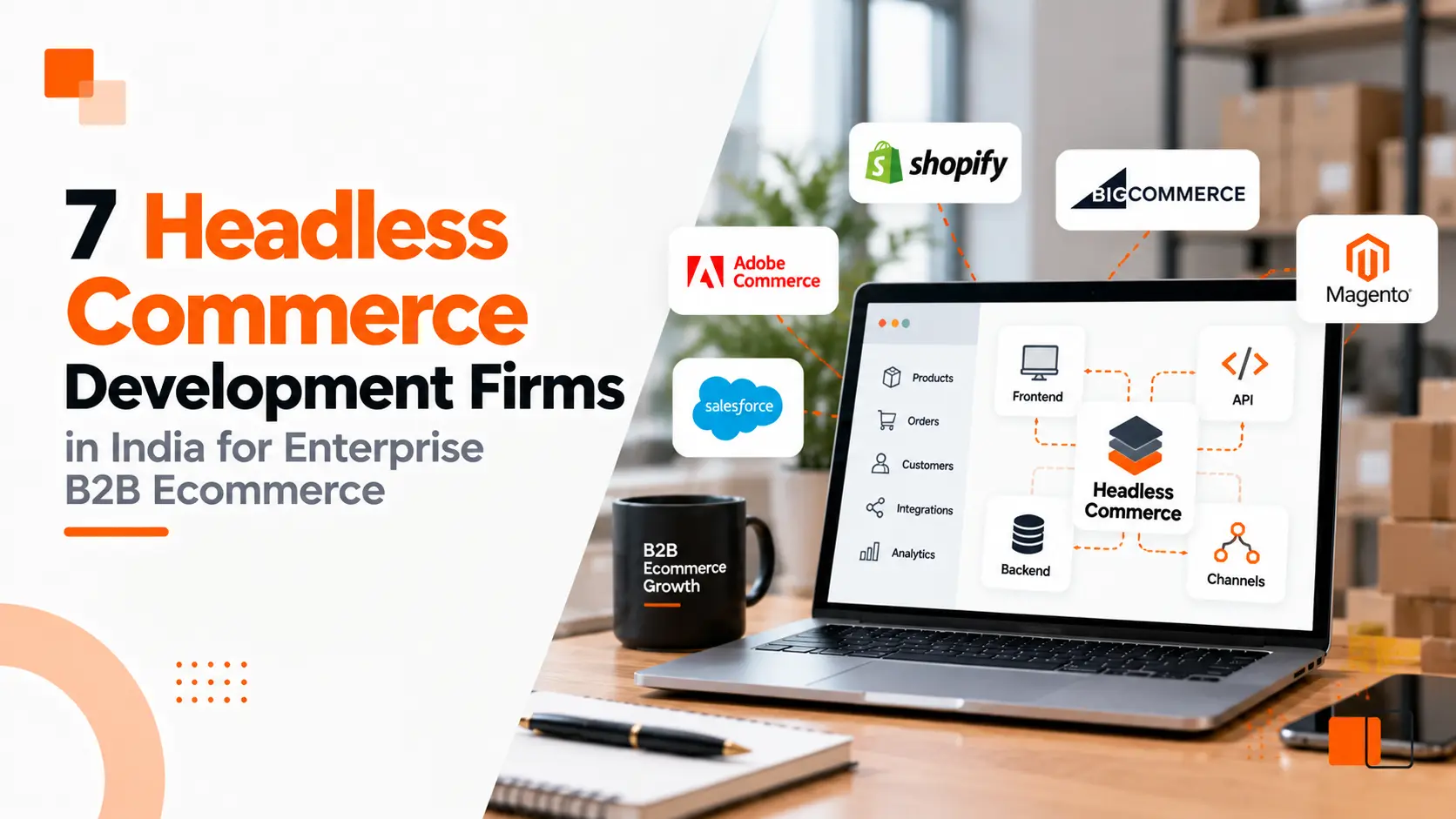
Top 7 Headless Commerce Development Companies in India for Modern Ecommerce

The ecommerce industry is evolving rapidly as businesses continue focusing on speed, scalability, personalization, and seamless customer experiences. Traditional ecommerce platforms are often limited when businesses need advanced frontend flexibility, omnichannel experiences, and scalable digital commerce architecture. This is why many modern ecommerce brands are now investing in headless ecommerce solutions in india to create […] Top 7 Headless Commerce Development Companies in India for Modern Ecommerce[...]

Recommended

All Posts

BigCommerce

BigCommerce Store Redesign: Signs Your Ecommerce Business Needs an Upgrade

Frequently Asked Questions

If your store looks outdated, loads slowly, or has poor mobile experience, it likely needs a redesign. Declining conversions, difficult navigation, and weak branding alignment are also strong indicators that your BigCommerce store is no longer performing effectively.

Yes, a well-planned BigCommerce redesign improves UX, page speed, and product presentation, which directly impacts conversions. Simplified navigation, better checkout flow, and mobile-first design help reduce drop-offs and encourage more completed purchases.

Typically, every 2–3 years is recommended, depending on industry trends and performance. However, if your store shows performance issues, outdated design, or fails to meet modern user expectations, you may need an earlier redesign.

A proper BigCommerce redesign preserves and can improve SEO if handled correctly. Maintaining URL structure, optimizing page speed, and implementing SEO best practices ensures rankings are protected while improving overall visibility and performance.

Focus on user experience, mobile responsiveness, site speed, and conversion optimization. Also ensure scalable architecture, improved navigation, and integration of modern BigCommerce features to support long-term business growth and better customer experience.

Magento

Magento Is Not Dead: Why Large Ecommerce Businesses Still Choose Magento in 2026

Frequently Asked Questions

Yes. Magento remains a strong option for medium and large businesses that need advanced customization, multi-store management, B2B features, and complex integrations. Its scalability and API-first architecture make it ideal for long-term ecommerce growth.

Enterprise businesses often require custom workflows, ERP integrations, unique pricing models, and complete control over their ecommerce ecosystem. Magento offers greater flexibility and customization than many SaaS platforms with fewer limitations.

Absolutely. Magento supports headless commerce through robust APIs, allowing businesses to build custom storefronts using technologies like React, Next.js, and PWAs while maintaining a powerful backend for managing products and orders.

Magento is best suited for enterprises, B2B companies, manufacturers, wholesalers, and multi-brand retailers. Businesses with large product catalogs, international operations, and complex customer journeys gain the most value from its capabilities.

In most cases, yes. Magento offers extensive flexibility but requires technical expertise for customization, integrations, performance optimization, and security management. An experienced development partner helps ensure long-term success and scalability.

Headless Commerce

Headless Commerce vs Traditional Ecommerce: Which Solution Is Right for Your Business?

Frequently Asked Questions

The primary difference is architecture. Traditional ecommerce connects the frontend and backend in a single system, while headless commerce separates them and uses APIs to communicate. This gives businesses greater flexibility, customization, and scalability.

Headless commerce is often better for rapidly growing businesses because it supports advanced customization, omnichannel selling, and scalable digital experiences. Traditional ecommerce works well for businesses with simpler requirements and limited budgets.

Many businesses are adopting headless commerce to improve website performance, deliver personalized customer experiences, support multiple sales channels, and gain greater flexibility for future growth.

Yes, headless commerce typically requires a higher initial investment due to custom development and API integrations. However, it can provide long-term benefits through better scalability, faster performance, and improved customer experiences.

Industries such as fashion, electronics, furniture, home décor, and B2B ecommerce benefit significantly from headless commerce because they often require personalized experiences, complex product catalogs, and omnichannel capabilities.

Yes, businesses can migrate from platforms like Shopify, Magento, WooCommerce, or BigCommerce to a headless architecture. Working with a headless ecommerce development company in India can help ensure a smooth migration process.

Consider factors such as your budget, growth plans, customization requirements, technical resources, and omnichannel goals. Traditional ecommerce is ideal for quick launches and lower costs, while headless commerce is better for businesses seeking flexibility, innovation, and long-term scalability.

Headless Commerce

Top 7 Headless Commerce Development Companies in India for Modern Ecommerce

Frequently Asked Questions

Headless ecommerce solutions in india allow businesses to separate frontend and backend ecommerce systems for better flexibility, responsiveness, and performance. This approach helps brands create scalable storefront experiences across websites, mobile apps, and digital channels.

A professional headless commerce company in india helps businesses improve frontend flexibility, ecommerce scalability, website performance, and customer engagement. These companies also support omnichannel commerce and responsive storefront development.

Professional headless ecommerce development services in india usually include frontend development, API integrations, responsive UI/UX design, ecommerce migration, storefront optimization, and scalable ecommerce architecture solutions.

A headless ecommerce development company in india helps businesses improve customer experience, frontend performance, website responsiveness, and ecommerce flexibility. Faster storefronts and better usability also improve conversions and online engagement.

Headless commerce development services in india focus on scalable ecommerce architecture, responsive frontend experiences, omnichannel commerce, and flexible integrations. This helps businesses create future-ready ecommerce ecosystems for long-term digital growth.

Got a Project or Partnership in Mind?

    100% secure, no spam.