



EcommerceSEO

AI Search Optimization for Ecommerce: The New SEO Playbook for 2026

Shoppers increasingly ask AI systems for product recommendations instead of scrolling search results, and that changes how ecommerce visibility works. This guide explains what AI Search Optimization actually means for ecommerce, how AI Overviews, AI Mode, ChatGPT, Gemini, and Perplexity discover and reference products differently than traditional search, and why strong SEO, clean product data, structured information, and real brand credibility remain the foundation, not a replacement, for AI-search visibility in 2026. AI Search Optimization for Ecommerce: The New SEO Playbook for 2026[...]
BigCommerceEcommerceShopifyWooCommerce

Top AI Solutions for Automating Shopify, WooCommerce, and BigCommerce

AI automation is helping Shopify, WooCommerce and BigCommerce businesses reduce repetitive work across customer support, catalog management, product discovery, inventory, marketing, reporting and operations. This guide explores practical ecommerce AI solutions, platform-specific automation opportunities, implementation approaches and areas where human approval is still important. Top AI Solutions for Automating Shopify, WooCommerce, and BigCommerce[...]
Ecommerce

Top AI Ecommerce Development Companies in India for Enterprise Brands

Compare leading AI ecommerce development companies in India for enterprise brands looking to implement AI-powered personalization, automation, product discovery, analytics, integrations, and intelligent ecommerce solutions. Top AI Ecommerce Development Companies in India for Enterprise Brands[...]
WooCommerce

10 WooCommerce Experts in India for Furniture & Home Decor Brands

Furniture and home decor brands often need more than a standard WooCommerce setup. This guide compares 10 WooCommerce experts in India for custom development, product variations, advanced filtering, integrations, shipping logic, performance, and ongoing support. 10 WooCommerce Experts in India for Furniture & Home Decor Brands[...]

Recommended

All Posts

BigCommerce

BigCommerce Design and Development for B2B Brands in India: Features That Matter Most

Frequently Asked Questions

Yes. BigCommerce can support company accounts, buyer roles, custom pricing, quotes, invoices, bulk ordering, multiple storefronts, and integrations required by wholesalers, manufacturers, and distributors.

BigCommerce B2B Edition extends the platform with business purchasing features such as company accounts, buyer permissions, quote workflows, invoices, order history, and a dedicated buyer portal.

Yes. Pricing can be structured around customer groups, price lists, company agreements, volume, and integrations. The final approach depends on the store plan, catalogue, and source of pricing data.

Yes. B2B workflows can support quote requests, seller responses, negotiated pricing, and conversion into orders. The process should be configured around the company’s existing sales and approval rules.

BigCommerce B2B setups can support purchase-order and invoice-based workflows for approved buyers. Credit terms, limits, and payment status may also need integration with accounting or ERP systems.

Yes. BigCommerce APIs and integration tools can connect the store with ERP, PIM, CRM, accounting, warehouse, and fulfilment systems. Data ownership and synchronization rules should be defined first.

A basic storefront may take several weeks. A larger B2B project involving custom pricing, buyer portals, quotes, data migration, multiple storefronts, and ERP integrations generally requires more time.

A custom theme is useful when standard themes cannot support the required catalogue, ordering workflow, brand design, or account experience. Businesses should customize only where there is a clear need.

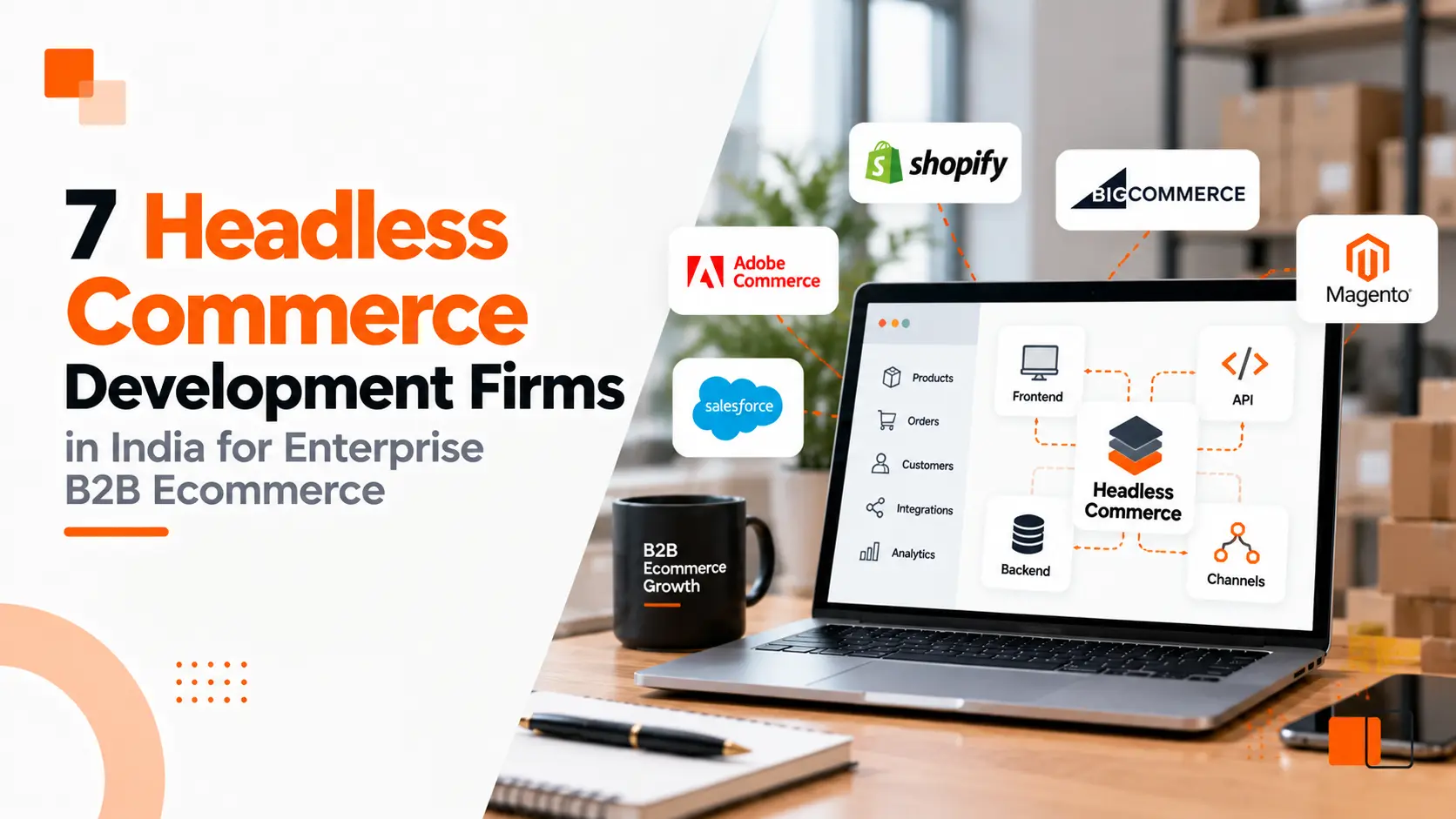
Headless Commerce

Best 7 Headless Commerce Agencies in Gujarat for D2C and Retail Brands (2026)

Frequently Asked Questions

Headless commerce separates the storefront from the ecommerce backend. The backend manages products, customers, orders, and checkout, while the frontend is developed separately and connected through APIs.

DIT India, 9Ecommerce, and DIT Interactive are suitable for multi-platform and customized projects. Memento Technologies and Everon Labs are more focused on Shopify, while MavenBird supports Shopify Plus, BigCommerce, and Magento.

The cost depends on the backend platform, frontend framework, design, integrations, content management, migration, hosting, and maintenance. A headless store usually costs more than a standard theme-based ecommerce website.

Yes, especially for brands requiring faster mobile experiences, custom product storytelling, content-led shopping journeys, multiple storefronts, or complex integrations. Smaller brands with basic requirements may not need a headless setup.

Shopify, Shopify Plus, BigCommerce, Magento, WooCommerce, and custom commerce platforms can support headless architecture through APIs.

It can improve speed when the frontend, APIs, hosting, images, caching, and third-party scripts are properly optimized. Headless architecture alone does not guarantee better performance.

Yes. A business can retain its current ecommerce backend and replace the storefront, provided the platform APIs support the required products, checkout, customer accounts, applications, and integrations.

ShopifyWooCommerce

WooCommerce vs Shopify for Indian Businesses: Cost, Control, and Growth Compared

Frequently Asked Questions

WooCommerce has no core subscription, but the business must pay for hosting, extensions, development, security, and maintenance. Shopify charges a subscription that includes hosting and core infrastructure. WooCommerce may be cheaper for a basic store, but complex stores can cost more to maintain.

Yes. Shopify is suitable for small businesses that want to launch quickly and avoid managing servers. Merchants should still calculate payment-gateway fees, applications, design, and transaction costs before selecting a plan.

Yes. Cash on delivery can be configured as a manual payment method, and Shopify does not charge third-party transaction fees on manual payments.

Yes. WooCommerce can support UPI through compatible Indian payment-gateway plugins or custom API integrations. The integration should be tested for refunds, webhooks, payment failures, and order updates.

WooCommerce provides greater direct control over hosting, code, databases, templates, and checkout behaviour. Shopify provides extensive customization through themes, applications, APIs, and custom development but remains a managed platform.

Businesses should hire expert Shopify developers in India when they need custom theme development, migration, application integrations, speed improvements, complex catalogue configuration, or long-term technical support.

A business should hire a dedicated WooCommerce developer in India when it requires custom plugins, specialized checkout logic, ERP integration, performance optimization, migration, or ongoing technical maintenance.

Shopify is generally easier to scale operationally because infrastructure is managed. WooCommerce can offer greater long-term flexibility and ownership, but the business must invest in suitable hosting, security, architecture, and maintenance.

Ecommerce

Top 11 Ecommerce Agencies in Surat for Textile, Jewellery, and Fashion Brands in 2026

Frequently Asked Questions

There is no single company that is best for every project. DIT India and 9Ecommerce may suit custom or complex stores, while Veyber, Gravmo, Agentic Digital Marketing, and WebCanteen may appeal to businesses seeking Surat-focused services. The right choice depends on your platform, catalogue, features, budget, and support requirements.

The cost depends on the platform, design, product count, integrations, and custom features. A small theme-based store generally costs less than a custom platform involving ERP connections, wholesale pricing, advanced filtering, migration, or headless development. Request a detailed scope rather than comparing only headline prices.

Shopify is suitable for many fashion brands because it is hosted, secure, and easy to manage. WooCommerce provides greater WordPress flexibility. BigCommerce and Magento may be better for larger or more complex catalogues. Platform selection should follow business requirements, not popularity alone.

Yes, provided the agency has experience with bulk product imports, variants, product attributes, collection structures, filtering, inventory synchronization, and search. Ask the agency to explain how it would organize your catalogue before development begins.

Jewellery brands should ask about secure checkout, product photography, zoom, certifications, dynamic pricing, insurance, shipping rules, returns, international currencies, customer support, mobile performance, and trust-building features.

Both options can work. A local team may make meetings and coordination easier, while a remote specialist may offer deeper platform experience. Compare technical expertise, relevant projects, communication, accountability, documentation, and post-launch support before deciding.

Got a Project or Partnership in Mind?

    100% secure, no spam.